
SEBI’s Mutual Fund Overhaul: Lower Costs and Performance-Linked Fees Set to Reshape Investor Wealth
The Indian mutual fund industry has seen explosive growth, surging 83 times in two decades. But at what cost? The Indian capital market regulator, the Securities and Exchange Board of India (SEBI), has drawn a clear line in the sand, unveiling a consultation paper that proposes a fundamental overhaul of the nation’s mutual fund regulations.
These landmark reforms, the most significant in nearly three decades, signal a powerful shift in regulatory focus from mere asset gathering to prioritizing investor outcomes. Poised to directly impact an industry managing assets worth more than Rs 75 lakh crore, these changes represent a watershed moment for India’s burgeoning mutual fund investor base.
The Driving Force: Why SEBI is Reengineering a 29-Year-Old Framework
The strategic decision to modernize the 1996 regulations is a direct response to the immense scale of the industry’s growth. The Assets Under Management (AUM) for the Indian mutual fund industry stood at a staggering Rs 75.36 lakh crore as of September 30, 2024.
The goals of this comprehensive review are clear: simplify regulatory language, remove outdated provisions, and significantly boost investor protection and transparency. The most impactful changes are centered on the Total Expense Ratio (TER), the annual fee that directly affects every investor’s future returns.
Deconstructing the New TER: A Deep Dive into Your Mutual Fund Costs
The TER is the most critical factor impacting an investor’s long-term, compounded returns. SEBI’s proposed overhaul of the TER structure is a pivotal move towards greater clarity and fairness.
→ Unbundling the Costs: Exposing What You Truly Pay For
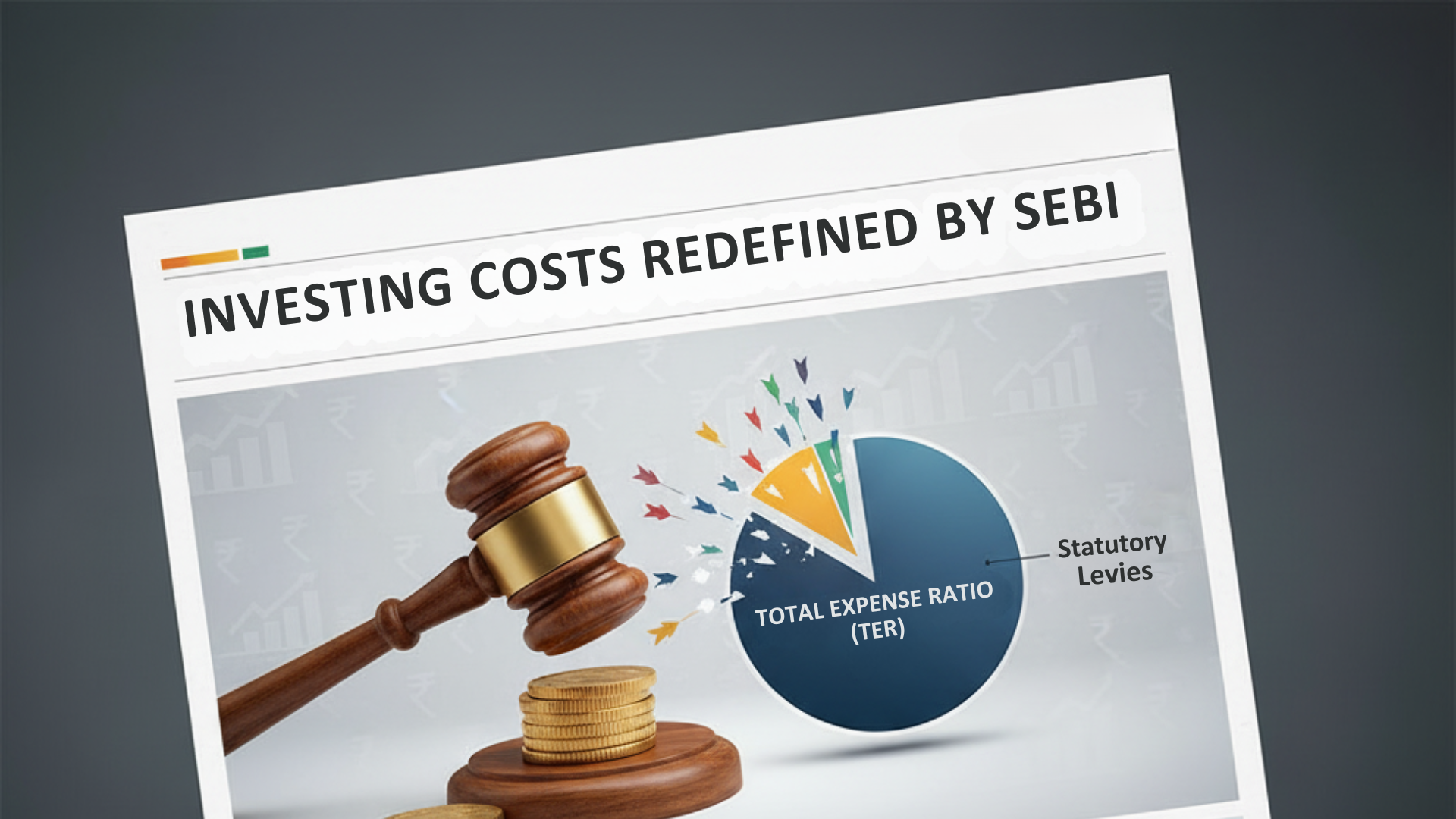
At the heart of the reform is a proposal to unbundle costs by excluding all statutory levies from the TER limits. Charges like the Securities Transaction Tax (STT), GST, CTT, and Stamp Duty will no longer be hidden within the TER. Instead, they will be charged separately and disclosed clearly.
This provides an unambiguous view of expenses, allowing investors to distinguish between the fund’s operational costs and government-mandated taxes.
→ Slashing the Hidden Drag: Radical Cut in Brokerage Fees
SEBI is proposing a radical cut to brokerage caps to eliminate hidden costs that diminish returns. Brokerage caps will drastically be reduced:
Cash Market Transactions: Reduced from 12 basis points (0.12%) down to 2 basis points (0.02%).
Derivative Transactions: Reduced from 5 basis points (0.05%) down to 1 basis point (0.01%).
The benefit of these lower transaction costs is direct and powerful, significantly enhancing the power of compounding for the long-term retail investor.
→ The End of an Era: Eliminating the 5 bps Exit Load Charge
SEBI has proposed eliminating the additional 5 basis points (0.05 percent) expense that Asset Management Companies (AMCs) were permitted to charge on schemes that levy an exit load. By removing this ‘transitory’ charge, SEBI directly reduces the cost of investing for investors in these schemes.
The Silent Wealth Multiplier: How Lower Costs Compound Wealth
The impact of a lower TER is profound over a long investment horizon. In a simple 25-year SIP experiment (Rs 10,000 invested monthly at a 10% gross annual return), a mere 0.25 percent reduction in TER resulted in a final corpus difference of Rs 4.7 lakh—almost 15 percent of the total invested amount.
The takeaway for investors is simple yet profound: costs compound just like returns do. Choosing funds with a lower TER does not just improve efficiency; it accelerates your journey toward financial independence.
A Paradigm Shift: Introducing Performance-Linked Fees
In a first-of-its-kind move, SEBI has proposed a framework for a voluntary ‘performance-linked expense ratio.’ This revolutionary structure rewards superior performance by allowing AMCs to earn higher fees only if the scheme delivers returns that outperform its benchmark.
This proposal could act as a powerful incentive for fund managers to generate alpha and signals a new era of accountability in active management.
The Industry Shake-Up: Winners and Losers from the Reforms
Major regulatory shifts inevitably reconfigure the competitive landscape.
→ The Investor: The Unquestionable Beneficiary
Retail investors are the primary and undisputed winners:
Greater Transparency: A clear, unbundled view of all costs.
Lower Expense Drag: Direct savings from brokerage cuts and the removal of the 5 bps charge.
Fairer Fee Structures: Paying for performance aligns fund manager incentives with investor goals.
→ Asset Management Companies and Brokerage Firms
Large AMCs could face significant margin pressure due to lower permissible costs. Analysis estimates the elimination of the 5 bps exit load expense could impact the Profit Before Tax (PBT) of major players by as much as 30-33 percent. Meanwhile, brokerage firms face a sharp reduction in commission income due to the drastic cuts in brokerage caps.
Investor Action Plan: Navigating the New Landscape
Mark Your Calendar: The deadline for public comment is November 17, 2025. Monitor SEBI’s final circulars for definitive changes.
Conduct a Cost Audit: Once the new rules take effect, demand the new, unbundled TER data and benchmark it ruthlessly against peers.
Assess Performance-Linked Funds: Evaluate if the new voluntary performance-based fee model aligns with your investment philosophy, as it indicates a fund manager’s confidence.
SEBI’s proposals represent a landmark, proactive step toward building a more transparent, cost-effective, and investor-centric mutual fund ecosystem in India.
Explore Portfolio Management
For a deeper understanding of SEBI’s regulatory reforms and how to conduct a cost-benefit analysis on your existing portfolio, explore perspectives from Ranjit Jha (CEO)—known for research-driven, long-term financial analysis.
To explore how Rurash Financials supports investors with fixed-income strategies, market research, and wealth solutions, visit the official website.