Global GDP Slowdown — What It Means for Markets & India
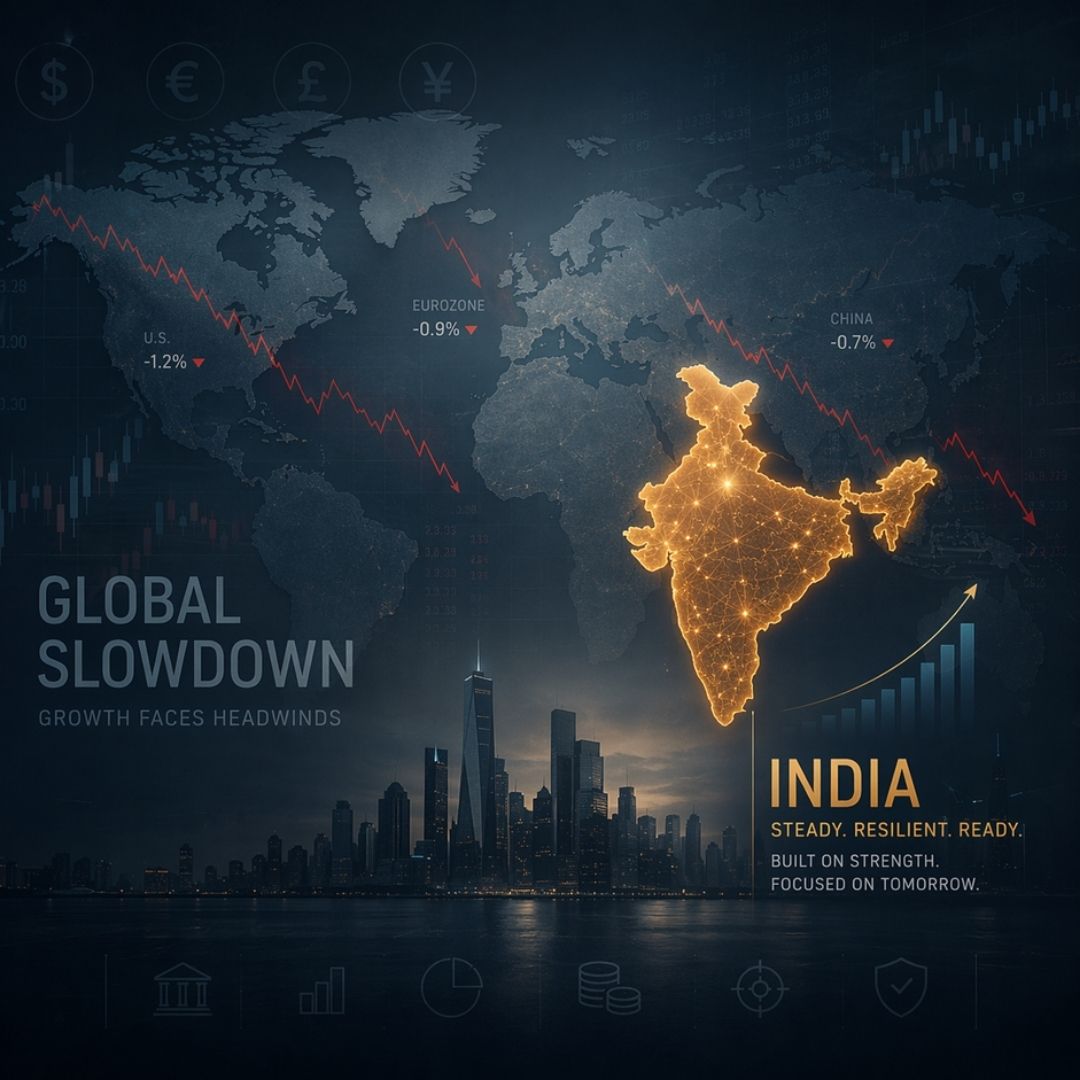
The global economic landscape in 2026 is entering a phase of moderation. After a period of recovery-driven growth, economies are now adjusting to tighter financial conditions, geopolitical uncertainties, and shifting trade dynamics.
While a slowdown often raises concerns, it also marks a transition—one that reshapes how capital flows, how markets behave, and how investors position themselves for the future.
The Global Picture
Recent data points toward a gradual slowdown in global GDP growth, driven by a combination of structural and cyclical factors:
- Prolonged tight monetary policies across major economies
- Ongoing geopolitical tensions impacting trade and energy flows
- Weak consumption demand in developed markets
- Realignment of global supply chains
This environment signals a shift from expansion to measured, cautious growth.
Impact on Global Economies
A slowing global economy has direct implications across financial systems:
- Corporate earnings growth begins to moderate
- Capital expenditure and investment activity decline
- Equity markets experience increased volatility
- Investors shift toward capital preservation strategies
In such cycles, markets tend to move from growth-driven optimism to risk-aware allocation.
Market Reaction
As uncertainty rises, capital flows begin to reposition.
Investors globally tend to move toward:
- Fixed income and bond instruments
- Defensive sectors with stable cash flows
- Structured and alternative investment vehicles
This reflects a broader shift—from aggressive return-seeking to risk-adjusted positioning.
What It Means for India
Amid global slowdown concerns, India continues to demonstrate relative resilience.
Key strengths include:
- Strong domestic consumption
- Infrastructure-led growth momentum
- Policy stability and reform continuity
However, the impact of global trends cannot be ignored:
- Export-oriented sectors may face demand pressure
- Foreign Institutional Investor (FII) flows could remain volatile
- Currency movements may influence overall returns
India’s position is not isolated—it is relatively stronger, but still globally connected.
How Smart Investors Respond
Disciplined investors do not react by exiting markets.
They respond by rebalancing and restructuring portfolios.
Key focus areas include:
- Diversification across geographies and asset classes
- Increased allocation to stable and income-generating assets
- Maintaining long-term positioning despite short-term volatility
The objective is not to avoid cycles—but to navigate them with structure and clarity.
The Strategic Shift
In a slowing global environment, investment strategy evolves:
From:
Short-term opportunity chasing
To:
Structured, risk-aware, long-term allocation
This transition separates reactive investing from strategic wealth creation.
Final Insight
A global slowdown does not eliminate opportunity.
It changes where and how you invest.
Markets may become more selective—but for disciplined investors, they remain full of potential.
Explore More Insights
To understand how global macro shifts and disciplined investing shape long-term wealth creation, explore insights from Ranjit Jha, CEO of Rurash Financials, a pioneer in research-driven wealth advisory.
Learn how Rurash Financials empowers investors through:
• AIF access
• Portfolio engineering
• Unlisted equity opportunities
• Personalised wealth strategies
Visit:
https://rurashfin.com/blog/
https://www.linkedin.com/in/ranjit-mjha/
CTA
Connect with us to structure your portfolio for global shifts.
https://rurashfin.com/media/global-gdp-slowd…or-markets-india/