
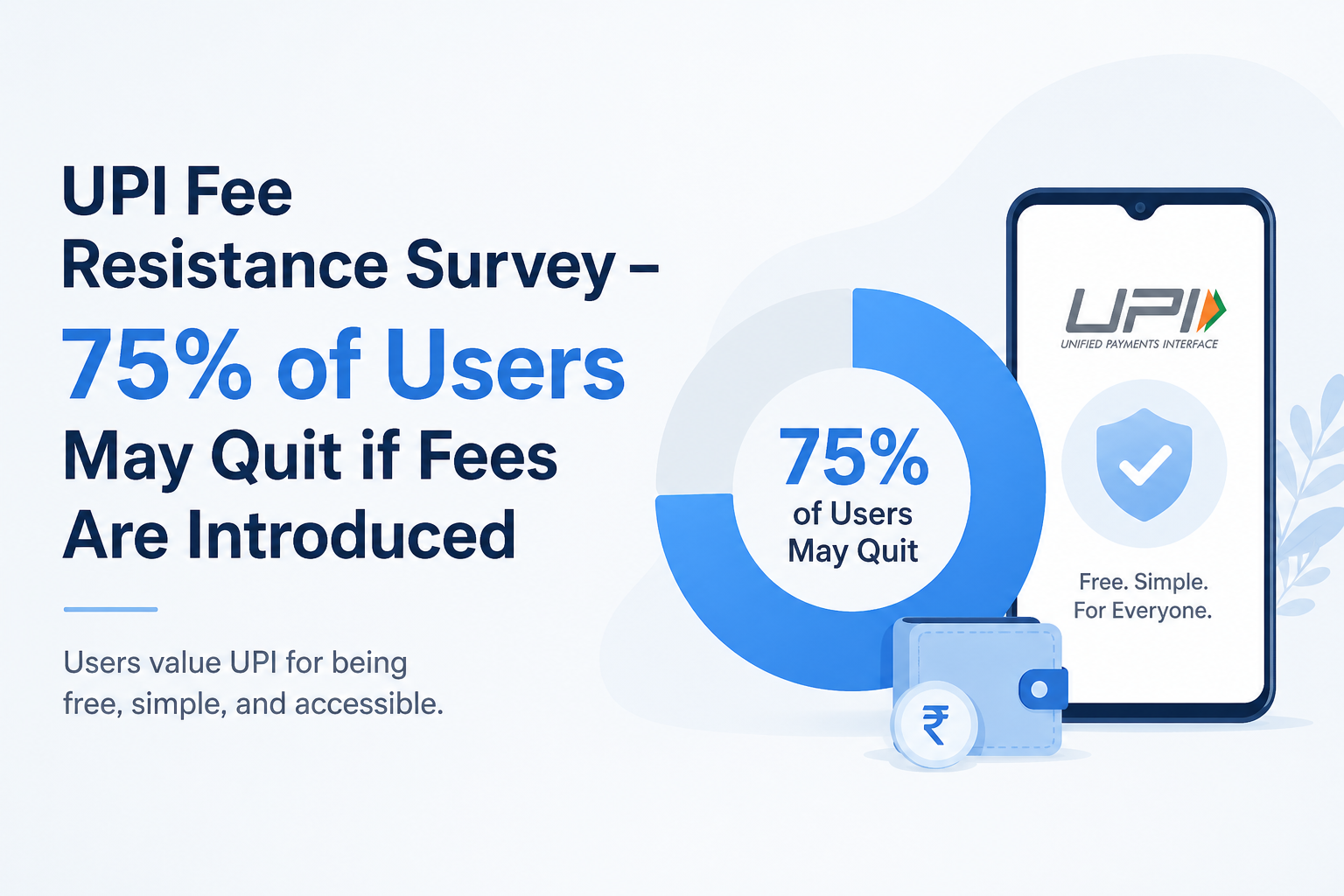
UPI Fees in India? 75% of Users May Quit, Survey Reveals
India’s digital payments revolution has been powered by Unified Payments Interface, which transformed the way consumers and businesses transact.
However, a recent survey suggests a major challenge for policymakers and payment players: 75% of users may stop using UPI if fees are introduced.
This highlights one critical truth—UPI adoption in India has been built not only on convenience, but also on zero-cost accessibility.
Why This Survey Matters
UPI is no longer just a payment method. It is now a core part of India’s economy.
It powers:
Retail shopping
Utility bill payments
Peer-to-peer transfers
Small merchant transactions
E-commerce checkouts
Daily micro-payments
Any policy shift around fees could significantly influence consumer behaviour.
Why Users May Resist Fees
India’s UPI growth has been driven by simplicity and free usage.
If charges are introduced, users may feel:
1. Loss of Convenience
Consumers are used to instant and free transfers.
2. Cost Sensitivity
Even small charges can affect frequent low-value transactions.
3. Shift Back to Cash
Some users may return to cash or alternative methods.
4. Merchant Pushback
Small businesses may resist customer drop-offs.
What It Means for India’s Digital Economy
UPI has been a global success story, helping formalise payments and increase transparency.
If user adoption slows, it could impact:
Transaction volumes
Fintech growth momentum
Consumer spending ease
Merchant digitisation
Data-led credit ecosystems
This is why fee-related decisions require careful balancing.
What It Means for Fintech Companies
For payment platforms and fintech firms, monetisation remains a challenge.
Many players seek revenue through:
Lending cross-sell
Merchant services
Subscription products
Value-added financial services
Ecosystem partnerships
Direct transaction fees may not always be the best path in a price-sensitive market.
What Investors Should Watch
This development is relevant for investors tracking:
Fintech companies
Payment infrastructure businesses
Consumer internet platforms
Banking digitisation trends
India’s formal economy growth story
The long-term opportunity remains large—but business models must evolve sustainably.
India’s Bigger Opportunity
India remains one of the world’s fastest-growing digital payment markets.
Key strengths include:
Massive user base
Smartphone adoption
Government-backed infrastructure
Merchant acceptance growth
Financial inclusion expansion
UPI’s future likely depends on innovation more than user charges.
Final Insight
The survey result is clear:
India loves digital payments—but users value affordability.
UPI became dominant because it solved friction at zero cost. Any move toward fees must preserve trust, accessibility, and scale.
For businesses, monetisation matters.
For users, convenience matters.
For policymakers, balance matters most.
Explore More Insights
To understand how fintech trends, macro shifts, and disciplined investing shape long-term wealth creation, explore insights from Ranjit Jha, CEO of Rurash Financials, a pioneer in research-driven wealth advisory.
Learn how Rurash Financials empowers investors through:
• AIF access
• Portfolio engineering
• Unlisted equity opportunities
• Personalised wealth strategies
Visit:
https://rurashfin.com/blog/
https://rurashfin.com/media/
https://rurashfin.com/contactus/
https://www.linkedin.com/in/ranjit-mjha/
CTA
Connect with us to stay ahead of fintech trends, policy changes, and future wealth opportunities.