
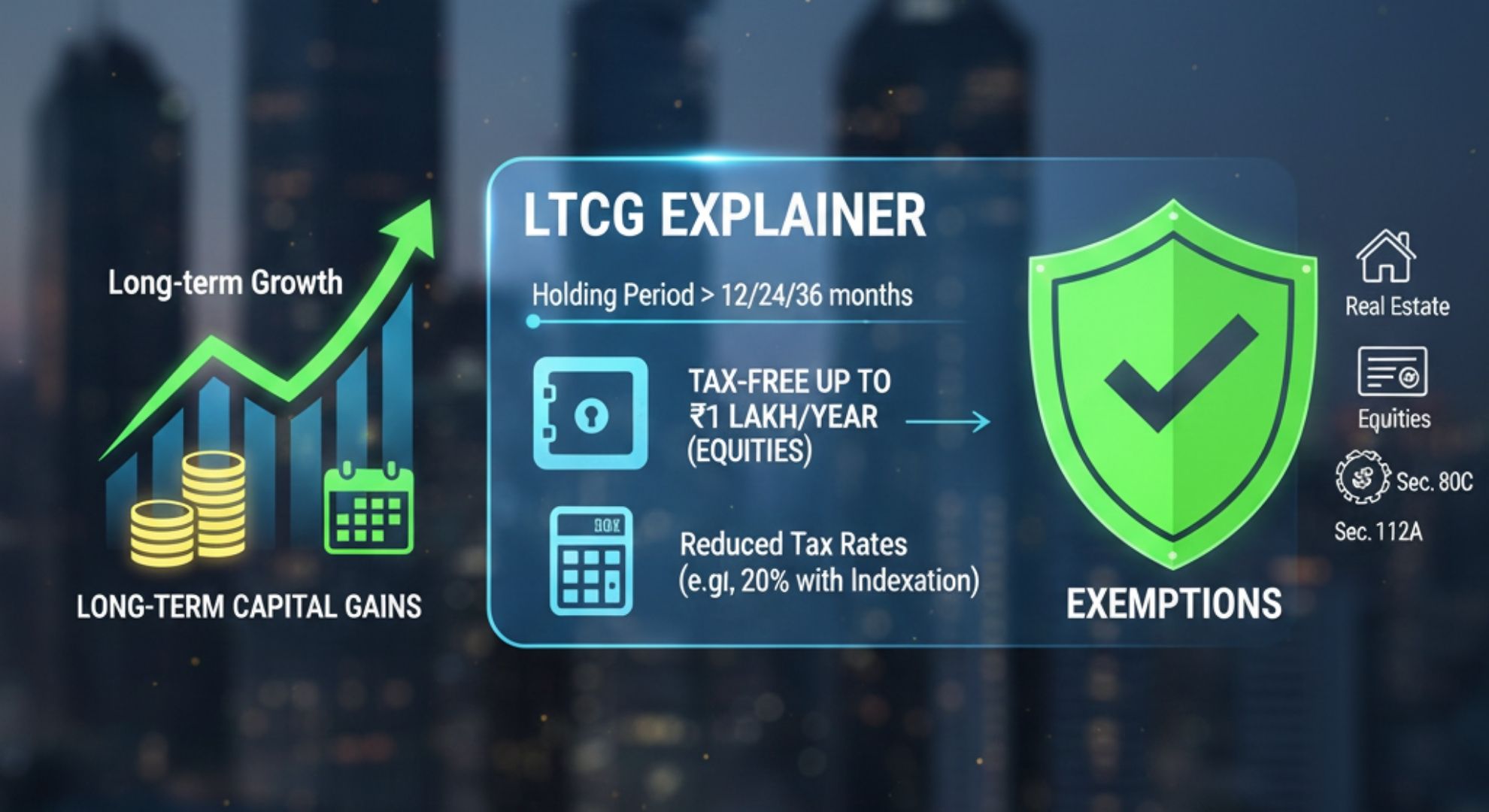
Smart Ways to Reduce LTCG Tax on Equity: A Practical Guide for Investors
Long‑term capital gains (LTCG) on listed shares and equity mutual funds have become a natural part of most retail investors’ wealth‑building journey. But a growing portfolio does not have to mean a growing tax burden.
With smart planning—using available exemptions, optimizing timing, and structuring family holdings efficiently—investors can significantly improve their post‑tax outcomes while staying fully compliant with the Income Tax Act, 1961.
1. Using Section 54F: The Most Powerful LTCG Exemption Tool
One of the most effective ways to reduce LTCG tax from equity is reinvestment via Section 54F, available to individuals and HUFs.
Eligibility
You can claim exemption on LTCG from equity if the net sale consideration is invested in one residential house in India.
Timelines to Follow
Purchase a residential property
• Within 1 year before or
• Within 2 years after the saleConstruct a residential property
• Within 3 years of saleIf you cannot invest immediately, deposit the amount in a Capital Gains Account Scheme (CGAS) before the tax‑return due date to retain eligibility.
When the Exemption Can Be Withdrawn
The benefit is revoked if:
The new house is sold within the lock‑in period
Funds are not utilised within the statutory window
You own more than the permitted number of residential houses on the date of transfer
CGAS deposits are not used correctly
Note: The earlier option of Sec 54EC bonds cannot be used for equity gains anymore—making 54F the primary mechanism.
2. Tax-Loss Harvesting: A Smart Year-End Strategy
Effective tax planning also includes active portfolio management:
Set-off Rules
Short-term capital loss (STCL) → can be set off against both STCG and LTCG
Long-term capital loss (LTCL) → can be set off only against LTCG
Unused losses can be carried forward for 8 years if the tax return is filed on time.
Selling underperforming assets to realize losses can significantly lower your tax bill.
3. Making the Most of Section 112A Annual Exemption
LTCG on listed equity and equity mutual funds is taxed at:
12.5% + surcharge + cess
Applicable on gains exceeding ₹1.25 lakh per financial year.
You can reduce your tax outgo by:
Spreading profit‑booking across financial years
Ensuring you cross the 12‑month holding period to classify gains as long‑term
Monitoring gains throughout the year to optimise use of the ₹1.25‑lakh annual exemption
4. Using Family Structuring & Gifts—Legally and Safely
Gifting can also help reduce tax if executed correctly.
Tax-Free Gifts
Transfers of shares/units to specified relatives are tax‑neutral.
The recipient pays tax on future gains—subject to clubbing rules for minors and spouses.
Best Practices
Maintain separate demat accounts
Create clear gift deeds
Keep transparent documentation
This ensures clean ownership trails and avoids tax disputes.
5. Strict Documentation & Timelines Are Crucial
To avoid losing exemptions:
Complete Section 54F reinvestments within deadlines
Deposit unused funds in CGAS before return filing
Keep proper records for gifts, acquisition costs and holding periods
A small delay or oversight can jeopardize the entire tax benefit.
Conclusion
LTCG from equity need not feel like an unavoidable tax burden.
With disciplined planning—using Sec 54F, loss harvesting, annual exemptions, and family‑level structuring—investors can legally and efficiently optimize taxes while building long-term wealth.
Explore More Insights
For a deeper understanding of how wealth management, advisory excellence, and capital‑market strategies shape India’s financial ecosystem, explore guidance from Ranjit Jha (CEO)—a pioneer in research‑driven wealth advisory.
To learn how Rurash Financials empowers investors through:
AIF access
Portfolio engineering
Unlisted equity opportunities
Personalised wealth strategies