
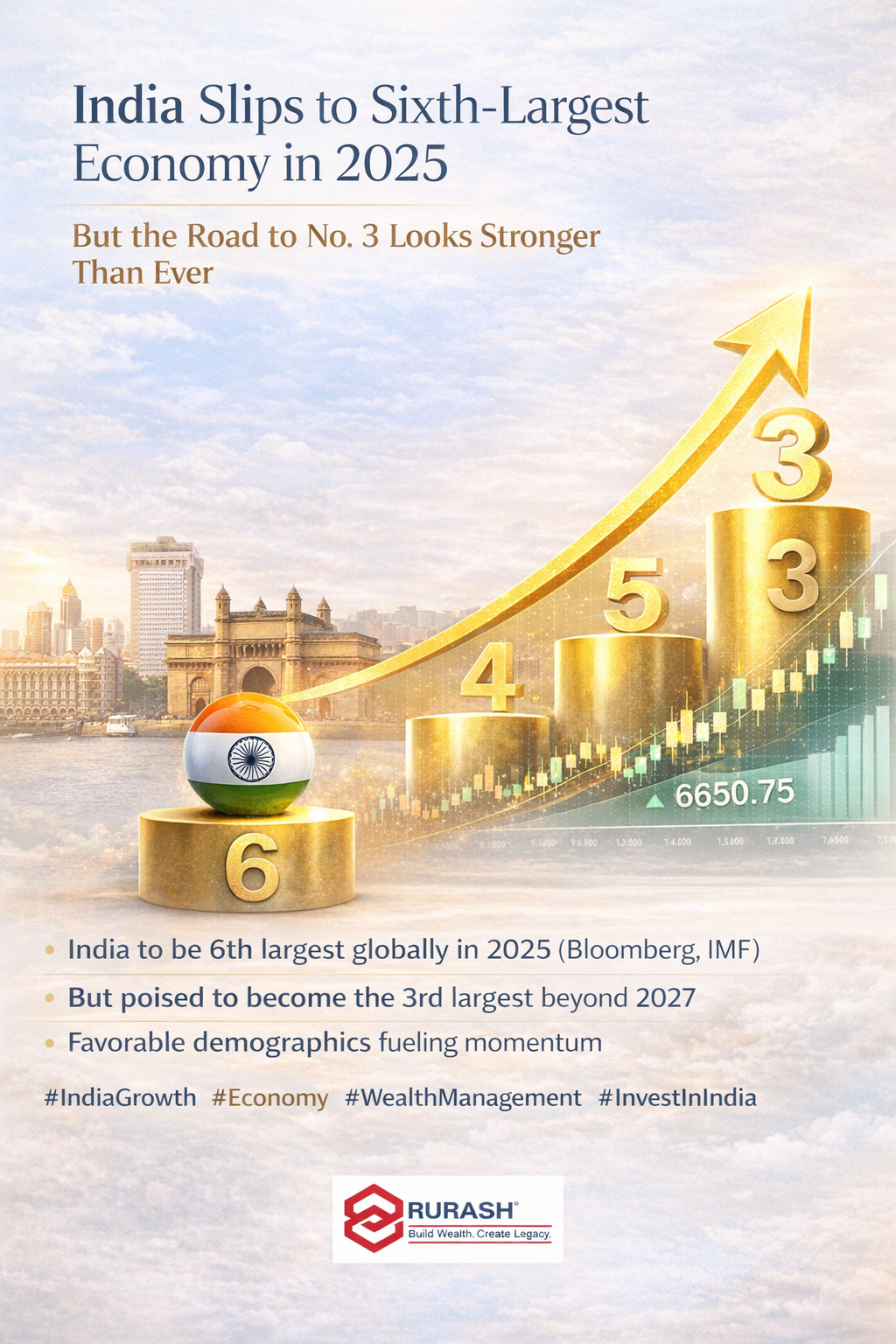
India Slips to Sixth-Largest Economy in 2025 — But the Road to No. 3 Looks Stronger Than Ever
India’s position in the global economic rankings may have slipped to sixth-largest economy in 2025, but the bigger story lies beyond the headline. Current projections indicate that India is on track to become the world’s third-largest economy by 2031, reinforcing the country’s long-term structural growth narrative.
Short-term ranking changes often reflect currency movements and nominal GDP shifts. Long-term economic power, however, is built on demographics, productivity, domestic demand, and policy momentum—areas where India continues to stand out.
Understanding the 2025 Ranking Shift
India’s temporary move to sixth place is largely linked to:
-
Exchange rate fluctuations against the US dollar
-
Variations in nominal GDP calculations
-
Faster short-term growth in select competing economies
-
Global inflation and pricing adjustments
This does not indicate weakening fundamentals.
Economic rankings based on dollar terms can change with currency movements, even when domestic growth remains strong.
Why India’s Long-Term Outlook Remains Powerful
India continues to be one of the most compelling long-term growth stories globally.
Key Drivers Include:
1. Strong Domestic Consumption
India’s large and growing middle class continues to drive demand across:
-
Consumer goods
-
Financial services
-
Housing
-
Technology
-
Healthcare
Domestic consumption remains one of India’s biggest economic strengths.
2. Demographic Advantage
With one of the youngest populations among major economies, India benefits from:
-
Expanding workforce participation
-
Rising income potential
-
Long-term productivity gains
-
Higher savings and investment capacity
This creates a multi-decade growth runway.
3. Infrastructure & Capex Push
Massive investments in roads, railways, ports, digital infrastructure, and manufacturing ecosystems are improving productivity and economic efficiency.
Public and private capex cycles are expected to remain supportive through the coming decade.
4. Manufacturing & Supply Chain Shift
As global companies diversify supply chains, India is increasingly positioned as a strategic alternative production hub.
Sectors benefiting include:
-
Electronics
-
Auto components
-
Renewables
-
Defence manufacturing
-
Pharmaceuticals
Why Third-Largest by 2031 Is Realistic
Becoming the third-largest economy would place India behind only the United States and China.
This projection is supported by:
-
Sustained GDP growth potential
-
Rising formalisation of the economy
-
Digital adoption at scale
-
Increasing global investment flows
-
Structural reforms improving ease of business
If India maintains policy continuity and growth momentum, this target appears achievable.
What It Means for Investors
India’s long-term economic rise creates opportunities across multiple themes:
Equity Markets
Growth sectors linked to consumption, finance, manufacturing, and infrastructure.
Private Markets
Emerging businesses, technology, and scalable domestic demand models.
Real Assets
Urbanisation-driven demand in logistics, housing, and infrastructure.
Wealth Creation
India’s expansion story supports long-term compounding opportunities for disciplined investors.
What Smart Investors Understand
Short-term rankings create headlines.
Long-term structural shifts create wealth.
India’s temporary movement in global rankings may attract attention, but the broader trajectory remains upward.
The key question is not where India ranks today—
It is where India is heading over the next decade.
Final Insight
India slipping to sixth-largest economy in 2025 is a momentary statistic.
India becoming third-largest by 2031 could be a structural milestone.
For investors, policymakers, and businesses, the bigger opportunity lies in participating in that long-term transformation.
Explore More Insights
To understand how macro trends, economic cycles, and disciplined investing shape long-term wealth creation, explore insights from Ranjit Jha, CEO of Rurash Financials, a pioneer in research-driven wealth advisory.
Learn how Rurash Financials empowers investors through:
• AIF access
• Portfolio engineering
• Unlisted equity opportunities
• Personalised wealth strategies
Visit:
https://rurashfin.com/blog/
https://rurashfin.com/media/
https://rurashfin.com/contactus/
https://www.linkedin.com/in/ranjit-mjha/
CTA
Connect with us to align your portfolio with India’s long-term growth story.
read the full article:-https://rurashfin.com/?post_type=rurash_media&p=22198&preview=true