
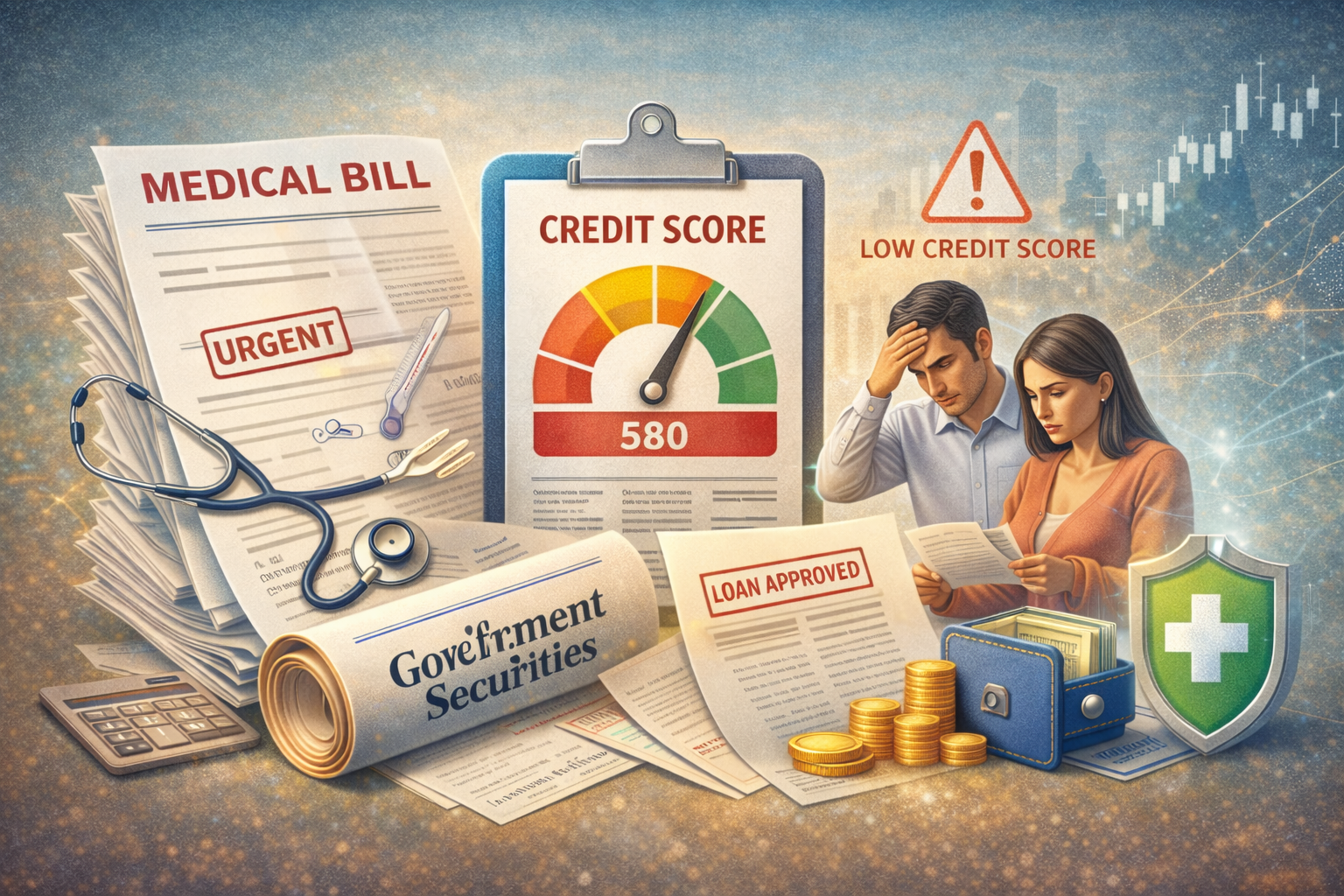
A medical emergency rarely arrives at a convenient time. Hospitalisation, surgery, or prolonged treatment can quickly lead to unexpected financial stress, especially when large medical bills arrive alongside recovery concerns.
However, medical debt does not automatically destroy your credit score. The real financial damage usually occurs because of delayed decisions, missed payments, or poor borrowing choices after the medical event. Managing the situation proactively can help protect both your finances and your credit profile.
Start by Verifying the Medical Bill
Before arranging funds or taking loans, the first step should always be reviewing the hospital bill carefully.
Billing errors are more common than many patients realise. Sometimes there are:
Duplicate charges
Incorrect room category billing
Services that were never actually used
Request an itemised bill and compare it with prescriptions, discharge summaries, and treatment records.
If you have health insurance, confirm which portion of the bill has been covered by the insurer and which has been rejected. In many cases, disputes arise because the pre-authorised amount differs from the final settlement amount. Appealing rejected claims can sometimes significantly reduce the financial burden.
A careful review of medical bills can often uncover errors or insurance adjustments that reduce the total payable amount.
Communicate with the Hospital Early
If the bill amount is large and cannot be paid immediately, avoid ignoring the payment request.
Instead, speak directly with the hospital billing department. Many hospitals are willing to offer structured payment plans or instalment options, especially for high-value treatments.
Early communication can also help negotiate:
Extended payment timelines
Waiver of late payment charges
Structured settlement plans
Once the bill is transferred to collections agencies, the risk of credit score damage increases significantly. Therefore, addressing the issue early can prevent the account from becoming delinquent.
Use Structured Borrowing Instead of Multiple Credit Cards
If external financing becomes necessary, it is important to choose the most stable and predictable borrowing option.
Experts suggest that a personal loan with a fixed EMI structure is often safer than relying on multiple credit cards.
Credit cards may appear convenient initially, but high interest rates and missed payment risks can quickly damage your credit score.
Structured borrowing offers several advantages:
Predictable repayment schedule
Lower interest rates compared to revolving credit
Better credit score management
Using a structured loan rather than scattered credit card borrowing helps protect long-term credit health.
Protect Your Payment History
Your payment history carries the highest weight in determining your credit score. Even during financial stress, maintaining regular payments is crucial.
To protect your credit profile:
Always pay minimum credit card dues on time
Avoid missing loan EMIs
Prioritise scheduled repayments over discretionary expenses
A single missed payment can significantly lower your credit score and remain on your credit report for years.
If your financial situation becomes difficult, consider temporarily reducing discretionary spending until the medical expenses are stabilised.
Speak to Your Lender If You Already Have Loans
If you already have existing EMIs such as a home loan, personal loan, or car loan, speak with your lender before missing payments.
Banks sometimes offer:
Short-term EMI restructuring
Temporary repayment relief
Modified repayment schedules
These solutions are far better than allowing a payment default to appear on your credit report.
Check Your Credit Report After Settlement
Once medical bills have been fully settled, it is advisable to review your credit report.
Ensure that:
The account is marked as closed or settled
No incorrect payment delays are reported
There are no billing or reporting errors
If inaccuracies appear in the credit report, they should be disputed immediately with the credit bureau.
Regularly reviewing your credit report helps identify reporting errors and prevents long-term credit damage.
Strengthen Financial Protection for the Future
A medical emergency often reveals gaps in financial planning. After resolving the immediate crisis, it is important to rebuild financial resilience.
Some key steps include:
Increasing health insurance coverage
Considering top-up or super top-up insurance plans
Building an emergency fund covering at least 6 months of expenses
Strong insurance and emergency savings can significantly reduce the need for borrowing during future health crises.
Final Thoughts
Medical expenses can create sudden financial pressure, but they do not automatically ruin your credit score.
The real risk arises when individuals ignore bills, miss payments, or rely on unstructured borrowing methods.
By verifying medical bills, negotiating payment plans, choosing structured financing, and protecting repayment discipline, individuals can manage medical debt while safeguarding their financial stability.
Financial discipline and proactive communication can turn a medical financial crisis into a manageable situation.