
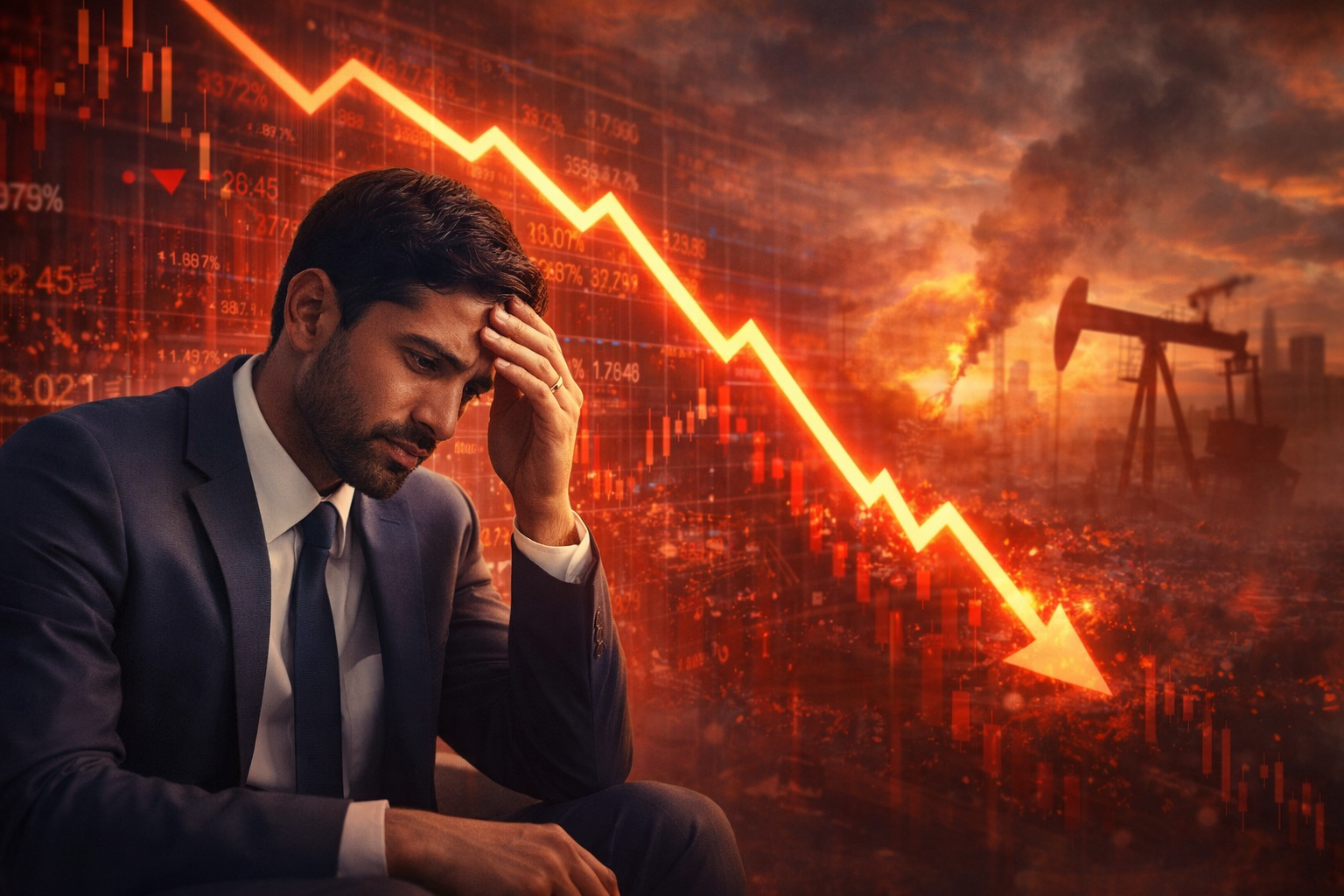
Sharp market falls often create anxiety among investors. But market corrections are a normal part of investing and are often seen even during years that eventually end in positive territory. Recent volatility has been linked to a sharp rise in crude oil prices amid geopolitical tensions in West Asia, which weighed on sentiment and dragged benchmark indices lower.
However, history repeatedly shows that short-term volatility does not necessarily translate into long-term wealth destruction. Markets move in cycles — periods of expansion are often followed by phases of consolidation or correction. These fluctuations are a natural mechanism through which markets reset valuations and rebalance investor expectations.
What investors need to remember is that short-term market declines are not the same as long-term wealth destruction. Corrections are part of the market cycle, and reacting emotionally during these phases can often do more harm than the correction itself. The article highlights that even in years that delivered positive returns, markets often saw meaningful drawdowns along the way.
Long-term data across global markets demonstrates that even during years that eventually delivered strong returns, markets experienced meaningful drawdowns along the way. This highlights an important principle of investing: temporary declines are part of the journey toward long-term wealth creation.
For long-term investors, this is where discipline matters most. Instead of panic-selling during uncertain phases, it is often wiser to stay aligned with your broader financial goals, asset allocation, and time horizon. A structured investment approach helps reduce emotional decision-making and keeps the focus on wealth creation rather than temporary volatility.
Periods of market correction can also present opportunities. When markets decline, quality assets often become available at more attractive valuations. For disciplined investors who remain focused on fundamentals rather than headlines, such phases can create strategic entry points for long-term investments.
Another important aspect during volatile markets is maintaining a balanced allocation between asset classes such as equities, debt instruments, and alternative investments. Diversification helps reduce overall portfolio risk and ensures that temporary market movements in one asset class do not disproportionately affect long-term financial goals.
Market corrections may feel uncomfortable in the moment, but they are often a natural part of the investment journey.
The real risk for many investors is not volatility itself, but making rushed decisions because of it.
Investing works best when it is linked to purpose, discipline, and long-term planning. Explore more insights from Rurash Financials and perspectives from Ranjit Jha (CEO) to build a stronger, more resilient financial strategy.