
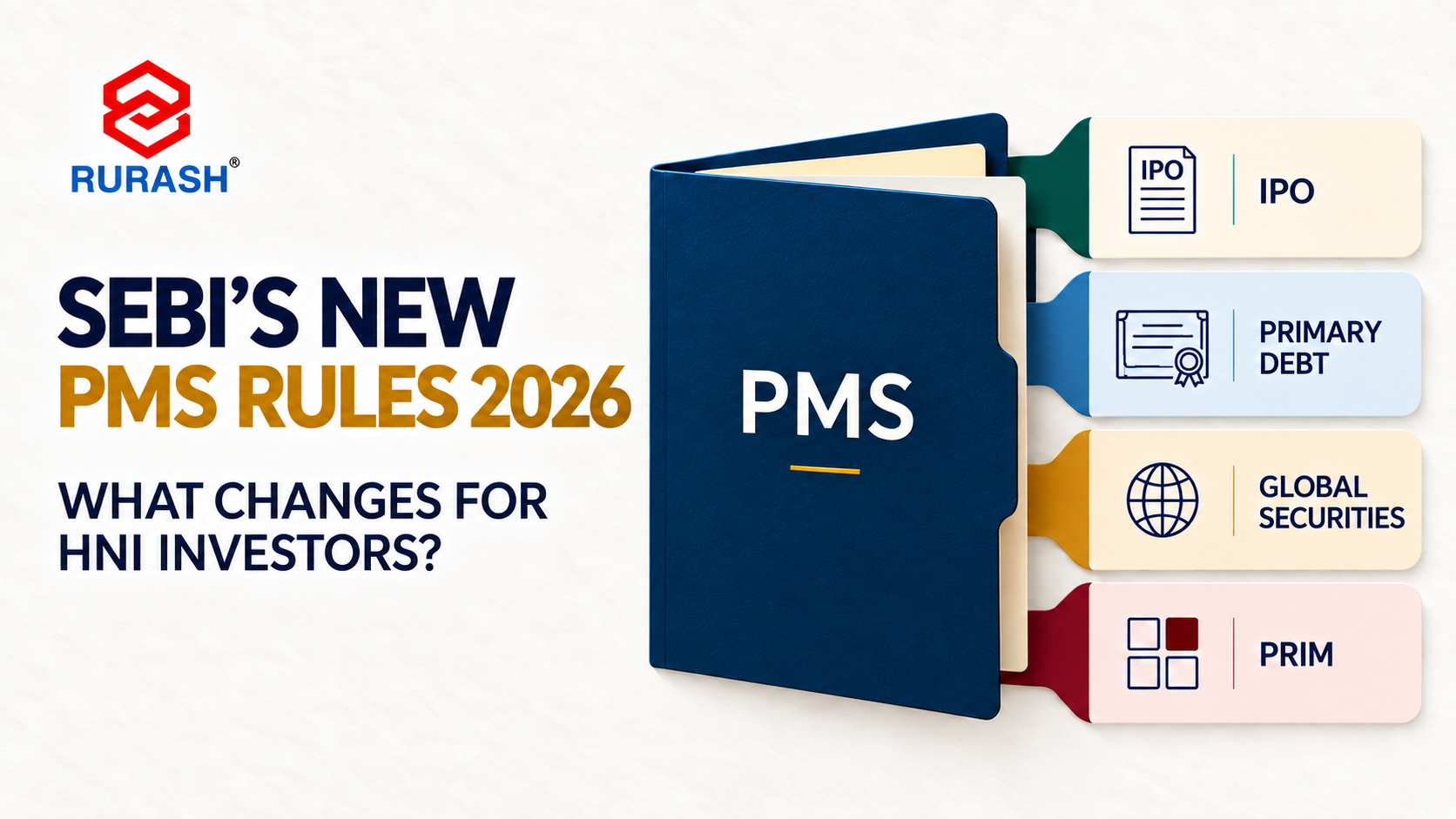
PMS investors may soon have more investment choices. But does a wider investment universe automatically improve a portfolio?
On 24 September 2026, the Securities and Exchange Board of India approved the new SEBI (Portfolio Managers) Regulations, 2026, which will replace the existing 2020 framework. The reform expands where portfolio managers may invest, introduces a new mutual-fund-focused route and simplifies parts of the regulatory structure.
For high-net-worth investors, the announcement is important because Portfolio Management Services may now be able to construct portfolios using a broader mix of listed equities, IPOs, debt securities, overseas investments, derivatives and mutual fund products.
However, more investment options do not automatically create a better portfolio. The outcome will still depend on how intelligently the portfolio manager uses this wider universe—and whether the strategy is suitable for the investor.
It is also important to distinguish approval from implementation. SEBI’s Board has approved the new framework, but investors should wait for the notified regulations, operational circulars and updated PMS documents before assuming that every new facility is immediately available.
What Was Missing From the Earlier PMS Framework?
Under the existing framework, discretionary PMS strategies were largely constructed through securities already listed or traded on recognised stock exchanges, along with other specifically permitted instruments.
This created certain limitations. A portfolio manager could identify an attractive company approaching an IPO, but the PMS framework did not offer the same flexibility to participate directly in the primary issue. Debt portfolios also faced restrictions around primary issuances and certain unlisted instruments.
International diversification was another limitation. Investors seeking overseas exposure generally had to arrange it separately rather than receiving it as an integrated component of their PMS strategy.
The SEBI PMS rules 2026 seek to widen this investment universe while consolidating and simplifying the regulations.
PMS Portfolios May Participate in IPOs
One of the most visible changes is the proposed ability of portfolio managers to invest client money in IPOs and other securities that are intended to be listed.
This can allow a PMS strategy to participate during the primary issuance stage instead of waiting for a company to list on the stock exchange.
For investors, the potential benefit is early access. A portfolio manager may be able to evaluate the company, its valuation, use of proceeds, competitive position and allocation prospects before trading begins in the secondary market.
But IPO participation also introduces specific risks. Issue pricing can be aggressive, historical information may be limited and post-listing prices can be volatile. Popular IPOs may also receive only small allocations, making it difficult for the investment to meaningfully affect a large PMS portfolio.
HNIs should therefore ask whether IPO participation will be a disciplined part of the investment process or merely a tactical attempt to capture listing-day excitement.
Primary-Market Debt Expands the Fixed-Income Opportunity
The new framework also permits portfolio managers to participate in primary debt issuances.
This could help debt-oriented and hybrid PMS strategies access bonds at the issuance stage, potentially expanding the available choices across issuers, maturities and credit structures.
Discretionary PMS providers may also invest up to 10% of a client’s assets under management in investment-grade, non-convertible unlisted debt securities, subject to client consent.
The change may support more customised fixed-income portfolios. A manager could potentially combine listed bonds, primary issuances and a limited allocation to eligible unlisted debt based on the investor’s income requirements and risk profile.
However, an investment-grade rating does not eliminate risk. Investors must still consider the issuer’s financial position, security cover, repayment structure, liquidity and concentration within the portfolio.
Unlisted debt can also be difficult to sell before maturity. The additional yield, if any, must therefore be evaluated against the loss of liquidity and the possibility of credit deterioration.
Overseas Securities Enter the PMS Universe
The 2026 framework permits discretionary and non-discretionary portfolio managers to invest in specified overseas securities.
The eligible universe is expected to include:
- Listed overseas equities and debt
- Foreign government securities
- Overseas mutual funds
- Exchange-traded funds and index funds
- Certain overseas REIT exposures
These investments will remain subject to the Foreign Exchange Management Act, the Reserve Bank of India’s Liberalised Remittance Scheme and other applicable conditions.
For an Indian HNI, overseas exposure can reduce dependence on one country, currency or economic cycle. It may also provide access to industries and businesses that are underrepresented in India.
But global diversification creates additional considerations. Currency movements can increase or reduce returns in rupee terms. Overseas markets have different valuations, economic cycles, tax rules, trading hours and geopolitical risks.
An investor should understand whether the PMS manager has genuine global research capability or is simply adding international securities because the regulations now permit them.
Derivatives May Play a Larger Role
SEBI has also approved greater flexibility for exchange-traded derivatives. Permitted exposure may extend up to 1.25 times the client’s assets under management, subject to the final regulatory conditions.
Derivatives can be used constructively for hedging, efficient portfolio management and managing market exposure. They can also increase complexity and losses when used aggressively.
Before investing, an HNI should ask the portfolio manager to explain:
- Whether derivatives will be used for hedging or directional exposure
- How leverage will be measured
- What maximum loss the strategy may experience
- How margin calls will be managed
- Whether derivative exposure is included when reporting portfolio risk
A strategy should not be judged only by its equity holdings if derivatives can materially change its effective market exposure.
What Is PRIM?
A major addition is the Portfolio Managers Route for Investing in Mutual Fund Units, or PRIM.
PRIM will allow portfolio managers to construct and manage portfolios using direct plans of Indian mutual funds, including:
- Actively managed mutual fund schemes
- Index funds
- Exchange-traded funds
- Specialised Investment Funds
The minimum investment under PRIM is expected to be ₹25 lakh, compared with the prevailing ₹50 lakh minimum generally associated with regular PMS services. An existing portfolio manager may offer PRIM as a separate investment approach, while an entity operating only within the PRIM universe may seek a separate registration under the prescribed requirements.
The fixed management fee under PRIM will be capped at 1% of client assets, although a performance-based fee structure may also be permitted. Investments in schemes managed by an affiliated, group or associate asset management company will be capped at 25% of the portfolio.
PRIM could be useful for investors who want professional asset allocation, fund selection and rebalancing but do not necessarily need a concentrated portfolio of directly held securities.
The central question, however, is whether the manager adds enough value to justify an additional advisory or portfolio-management layer over the underlying fund expenses.
HNIs should examine whether the service offers meaningful asset-allocation discipline, tax-aware rebalancing and risk management—or simply packages several mutual funds into a managed account.
What Changes for Accredited Investors?
Under PRIM, providers that also operate as mutual fund distributors will generally need to segregate their distribution and PRIM activities and clients. An exception has been provided for Accredited Investors.
This does not mean that accreditation guarantees better products or lower risk. It is a regulatory status that may permit certain flexibilities because the investor meets prescribed financial criteria and has completed the formal accreditation process.
Accredited investors should still examine conflicts of interest, fee arrangements, related-party exposure and the basis on which funds are selected.
Where the same financial group participates in portfolio management, mutual fund distribution and asset management, transparency becomes particularly important.
More Choice Can Also Create More Complexity
The new framework gives portfolio managers more tools. That can improve portfolio construction—but it also increases the number of ways in which risk can enter the portfolio.
An HNI portfolio may now combine listed shares, IPOs, primary debt, unlisted debt, overseas securities, mutual funds, SIFs and derivatives. Each instrument behaves differently and may involve its own liquidity, valuation, currency, credit and regulatory considerations.
A visually diversified portfolio can still be economically concentrated. For example, an Indian technology stock, a technology-focused overseas ETF and a global innovation fund may all respond to similar market conditions.
Investors should therefore look beyond the number of holdings and ask whether the portfolio is genuinely diversified across risk drivers.
What Should HNIs Ask Their Portfolio Manager?
Before selecting or continuing with a PMS strategy under the new framework, investors should ask:
- Which newly permitted instruments will the strategy actually use?
- What role will IPO participation play in the portfolio?
- What limits will apply to primary and unlisted debt?
- How will overseas investments be selected and monitored?
- Who will manage currency risk?
- Will derivatives be used for hedging, leverage or both?
- What is the maximum permitted exposure to derivatives?
- How will related-party and group-AMC conflicts be controlled?
- Under PRIM, what value is being added beyond holding mutual funds directly?
- What are the total costs, including management fees, performance fees, transaction costs and underlying fund expenses?
- How will performance be measured against an appropriate benchmark?
- What happens to illiquid holdings if the investor wants to exit?
- How did the strategy perform during significant market drawdowns?
- Will the revised investment approach require fresh client consent?
The most important question is not whether a portfolio manager can use a particular instrument. It is why that instrument belongs in the investor’s portfolio.
Ranjit Jha’s Perspective
According to Ranjit Jha SEBI’s new PMS framework represents an important evolution in India’s wealth-management industry. It gives portfolio managers greater flexibility to build portfolios across domestic equities, IPOs, debt, overseas securities and managed-fund products.
For HNI investors, the opportunity lies in better portfolio construction—not simply in gaining access to more instruments.
Every additional investment avenue also introduces another layer of risk, liquidity consideration and due diligence. A manager’s ability to invest overseas or participate in IPOs should not be treated as a reason to invest by itself.
Investors should evaluate whether the strategy has a clearly defined purpose, a repeatable investment process and risk controls that match the broader portfolio.
A wider investment universe becomes valuable only when every investment has a clear role.
Final Thought
The SEBI PMS rules 2026 could make Portfolio Management Services more flexible and more relevant to a wider range of affluent investors.
IPO participation, primary debt, overseas securities and PRIM may create useful opportunities. But none of these changes removes the need to examine performance consistency, drawdowns, fees, liquidity, conflicts of interest and portfolio concentration.
For an HNI, the right question is no longer only:
“What can my portfolio manager invest in?”
It is also:
“How will these additional choices improve my portfolio without introducing risks I do not understand?”
Connect With Rurash Financials
Considering PMS as part of your portfolio? Rurash Financials Pvt. Ltd. can help you evaluate strategy, risk, structure and suitability before you invest.