
With Most RBI Rate Cuts Done, Fund Managers See Limited Upside for Bond Prices — What Should Investors Do Now?
India’s fixed‑income landscape is entering a new phase. With the RBI delivering another 25 bps rate cut, the total easing for 2025 has reached 125 basis points — and fund managers believe the rate‑cut cycle is now near its end.
This changes the opportunity set for debt investors dramatically.
Why the Upside in Bond Prices Is Now Limited
Bond prices rise when interest rates fall.
But with most rate cuts already behind us:
The scope for capital gains is shrinking
Debt returns will now depend more on accrual (interest income) than duration plays
Investors must reset return expectations for the next few quarters
Fund managers expect a long pause from the RBI unless inflation surprises materially on the downside.
What Should Fixed‑Income Investors Do Now?
Shift Toward Accrual-Based Strategies
Accrual funds earn primarily from interest income, not rate movements — making them ideal in low‑rate‑volatility periods.
Recommended categories for the next 2–3 months:
Liquid Funds
Money Market Funds
Low-Duration Funds
Expected returns (as per fund managers):
| Investment Horizon | Suitable Funds | Estimated Return |
|---|---|---|
| Less than 1 year | Liquid, Money Market | 5.75% – 6.5% |
| 1–2 years | Short Duration | 6.5% – 7% |
| 2+ years | Corporate Bond, Short Duration | Stable accrual opportunities |
Duration Strategies: Only for Tactical, Experienced Investors
Duration funds benefit the most when interest rates fall — but only if the fall continues.
Some fund managers still see tactical room in long-duration government securities due to:
Lower inflation
Strong GDP growth
Expected OMOs in December
Possible Bloomberg bond‑index inclusion
If yields on the 10‑year G‑Sec (currently at 6.49%) drop further, investors may earn:
Potential total returns: 7.5% – 7.75%
But remember:
If rates rise, these funds can fall sharply.
Accrual vs Duration: Which Is Right for You?
Accrual Funds
✔ Stable
✔ Lower interest‑rate sensitivity
✔ Ideal when rate cuts slow down
Duration Funds
✔ Higher upside if rates fall
❌ Higher risk if rates rise
❌ Suitable only for skilled investors who can time entry/exit
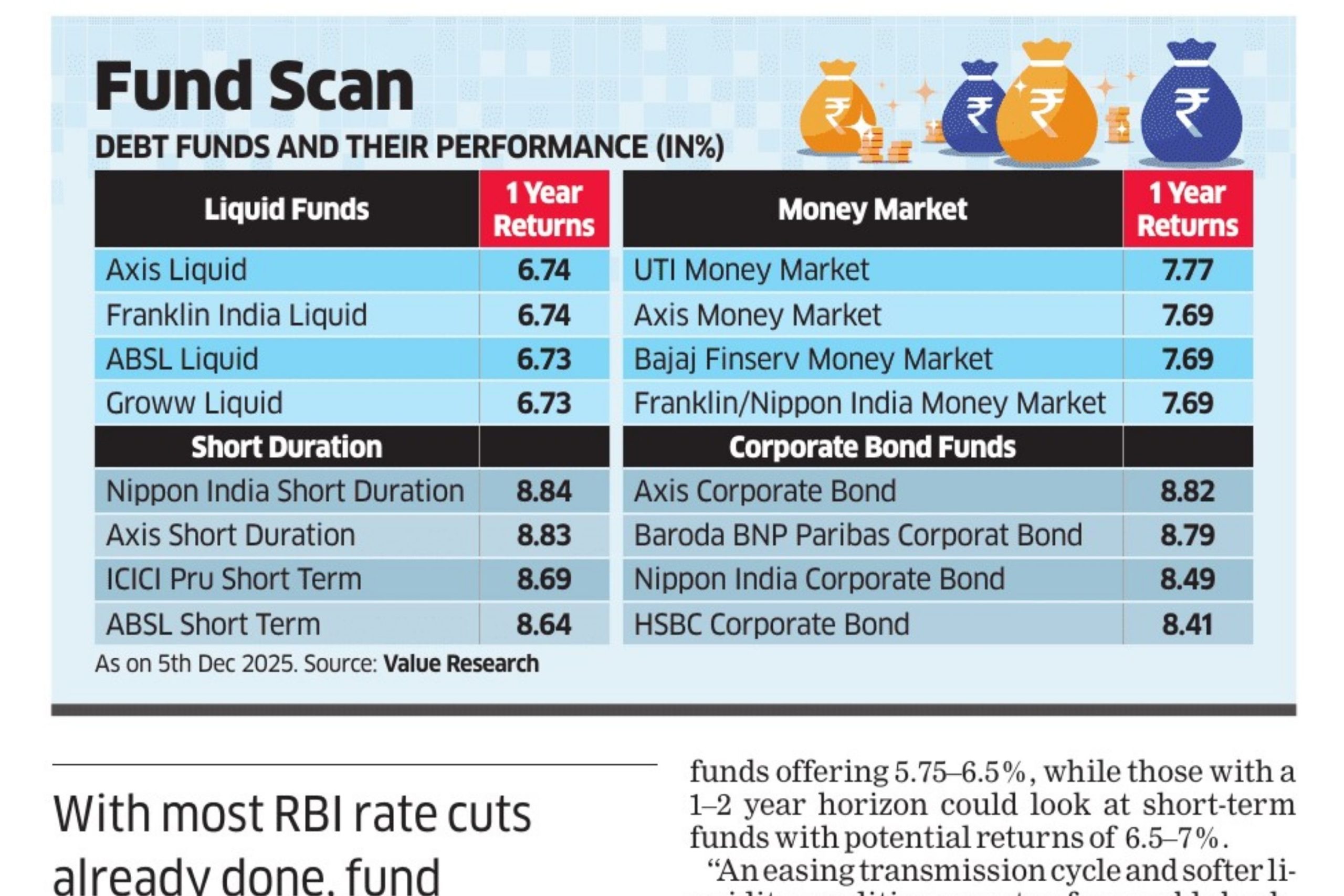
Debt Category Snapshot: Fund Performance (in %)
Liquid Funds
Axis Liquid
Franklin India Liquid
ABSL Liquid
Groww Liquid
Short Duration Funds
Nippon India Short Duration
Axis Short Duration
ICICI Pru Short Term
ABSL Short Term
Money Market Funds
UTI Money Market
Axis Money Market
Bajaj Finserv Money Market
Franklin / Nippon India Money Market
Corporate Bond Funds
Axis Corporate Bond
Baroda BNP Paribas Corporate Bond
Nippon India Corporate Bond
HSBC Corporate Bond
Bottom Line
With the interest‑rate cycle nearing a pause:
Accrual strategies dominate
Duration is tactical, not structural
Expect muted capital gains but stable income opportunities
DIIs will likely remain strong buyers in fixed income
Investors should align their allocation with horizon, risk appetite, and liquidity needs — not chase duration without conviction.
Explore More Insights
For deeper understanding of how wealth management, advisory excellence, and capital‑market strategies shape India’s financial ecosystem, explore guidance from Ranjit Jha (CEO) — a pioneer in research‑driven wealth advisory.
To learn how Rurash Financials empowers investors through:
AIF access
Portfolio engineering
Unlisted equity opportunities
Personalised wealth strategies