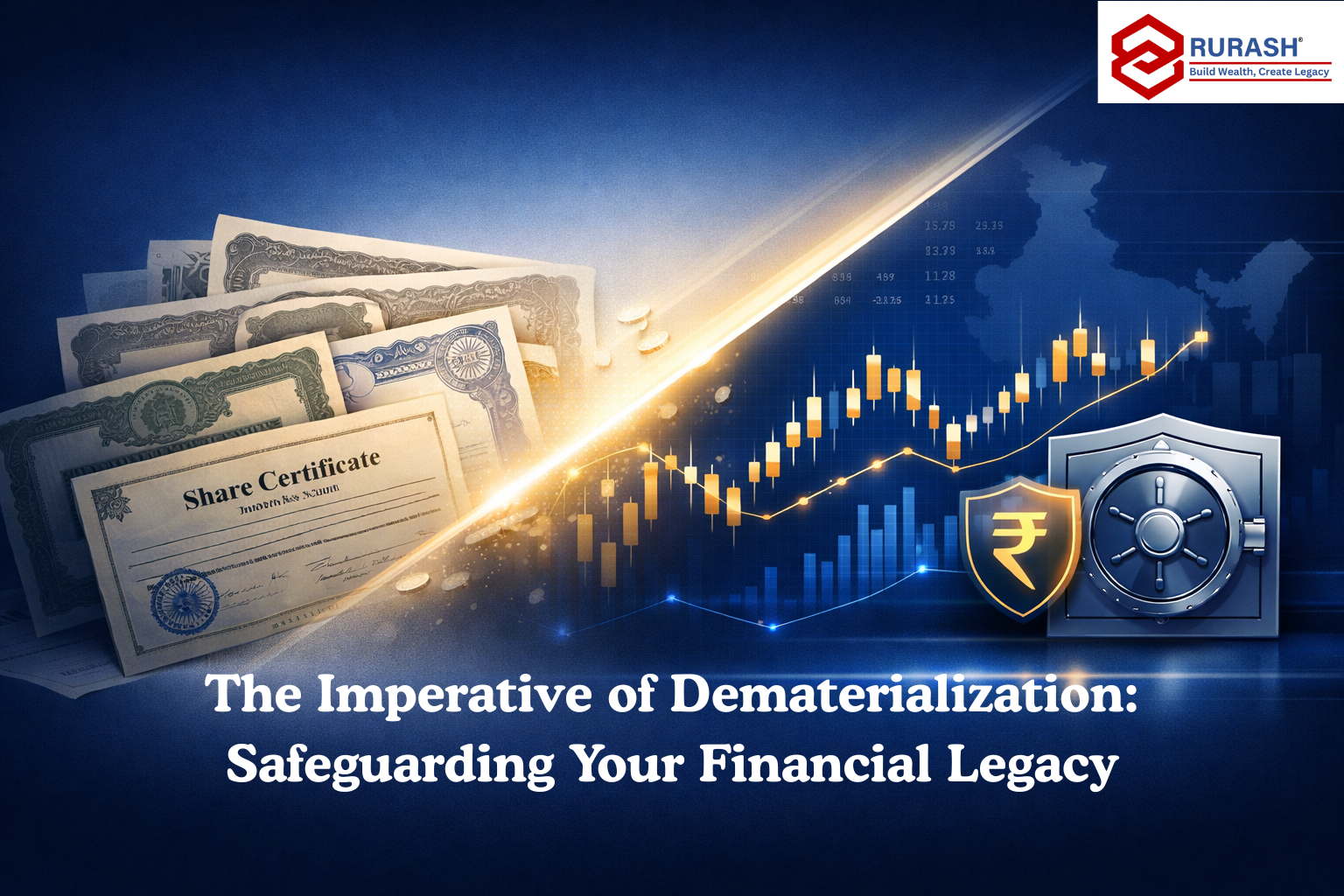
The Imperative of Dematerialization: Safeguarding Your Financial Legacy
In today’s evolving financial landscape, holding shares in physical form is no longer just outdated—it is a significant risk to your wealth. Dematerialization, or Demat, is the process of converting physical share certificates into electronic form. While regulatory frameworks have already transitioned markets into a digital-first ecosystem, many investors continue to hold legacy paper certificates, often unaware of the growing risks attached to them.
Converting these holdings is not merely a matter of convenience. It is a critical step toward ensuring that your investments remain liquid, secure, and legally enforceable.
Why Demat is Non‑Negotiable
The shift to electronic holdings was designed to eliminate the vulnerabilities associated with physical certificates. Investors who continue to hold shares in paper form face several “silent” risks:
Loss of Liquidity
Physical shares cannot be traded on stock exchanges. To unlock value, they must first be converted into Demat form.
Risk of Forfeiture
Shares with unclaimed dividends for seven consecutive years are transferred to the Investor Education and Protection Fund (IEPF). Recovering them later involves a complex legal process.
Physical Vulnerability
Paper certificates are exposed to risks such as theft, fire, damage, or simple misplacement. Reissuing lost certificates is both time-consuming and costly.
Common Complexities and Hidden Hurdles
Dematerialization is often more complex than it appears. Legacy holdings frequently come with documentation gaps that create friction during the conversion process.
Transmission and Succession Issues
When the original shareholder is no longer alive, shares must undergo transmission.
If no nominee is registered, legal heirs are required to submit documents such as a succession certificate, probate of will, or letter of administration—making the process lengthy and demanding.
Name Discrepancies and Mapping Errors
Older certificates often contain variations in names compared to modern identity documents.
Even minor differences—such as initials or missing middle names—can lead to rejection. Rectification may require affidavits, gazette notifications, or confirmations from registrars.
Address Mismatch and Locked Folios
Investors who have changed addresses over the years often face issues with outdated records.
Returned dividends can result in folios being marked as “inactive” or “locked,” requiring extensive documentation to reactivate.
Signature Mismatch
Signatures recorded decades ago may not match current signatures.
Resolving this requires formal banker verification and additional documentation, adding further delays.
A Structured Approach to Resolution
Bridging the gap between physical certificates and a compliant Demat account requires a methodical strategy:
Folio Consolidation
Multiple holdings under slight name variations should be consolidated into a single folio.
IEPF Recovery
If shares have already been transferred, a formal claim process must be initiated.
KYC Compliance
Updated KYC and nomination records are essential to ensure smooth processing and future transferability.
Conclusion
Holding physical shares in 2026 is equivalent to storing wealth in an unsecured form. As time passes, resolving discrepancies related to ownership, identity, and documentation becomes increasingly complex.
Dematerialization is not just a regulatory requirement—it is a necessary step toward protecting your financial legacy. By converting to Demat today, investors ensure that their assets remain secure, accessible, and seamlessly transferable across generations.
Explore More Insights
To understand how structured financial planning and regulatory compliance shape long-term wealth preservation:
Explore insights from Ranjit Jha, CEO of Rurash Financials, a pioneer in research-driven wealth advisory.
Learn how Rurash Financials empowers investors through:
• AIF access
• Portfolio engineering
• Unlisted equity opportunities
• Personalised wealth strategies
Visit:
https://rurashfin.com/blog/
Media & Insights:
https://rurashfin.com/media/
Company Website:
https://rurashfin.com/contactus/
CEO LinkedIn:
https://www.linkedin.com/in/ranjit-mjha/