
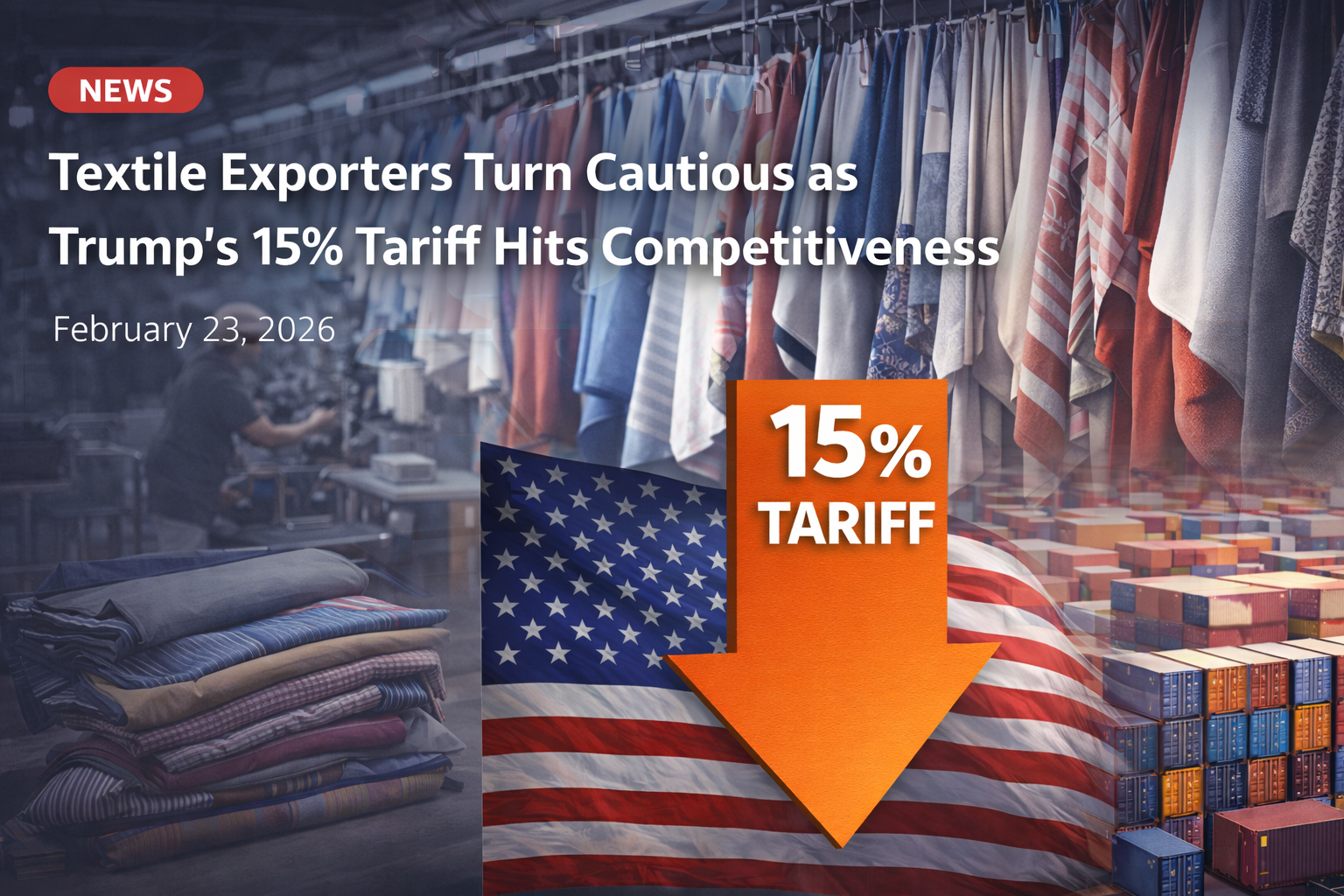
Indian apparel and textile exporters are adopting a cautious “wait-and-watch” stance as global trade policy enters a volatile phase following changes to U.S. tariff structures. After a 15% flat global tariff was introduced, down from earlier higher duties, industry players say the relative competitive advantage India once held over other Asian exporters — such as Bangladesh and Vietnam — has largely diminished.
Earlier, India benefited from tariffs around 18%, compared to Bangladesh at 19% and Vietnam at 20%, giving Indian exporters a slight edge. The United States accounts for roughly 28% of India’s textile exports, amounting to about $10.05 billion in FY24, with apparel being the largest segment followed by home textiles and made-ups. Approximately $38 billion worth of textiles and apparel exports were recorded in FY25.
Exporters say that, although the tariff reduction to 15% might help recover some pending orders, long-term planning remains difficult due to ongoing policy uncertainty. Repricing contracts and maintaining competitiveness against rivals such as China and Bangladesh is becoming increasingly challenging as global markets remain far from bullish.
Adding to the fluid trade picture, Indian textile stocks rallied on February 23 after the U.S. Supreme Court struck down broader import levies imposed under previous tariff actions, easing immediate concerns over potential trade disruptions. Companies such as Kitex Garments, Trident Ltd and Welspun Living saw gains as sentiment improved among export-oriented investors.
However, the tariff changes have narrower implications than initially anticipated, prompting exporters to remain cautious and weigh the impact on pricing, order books, and long-term demand — even as they seek clarity on future trade arrangements.