
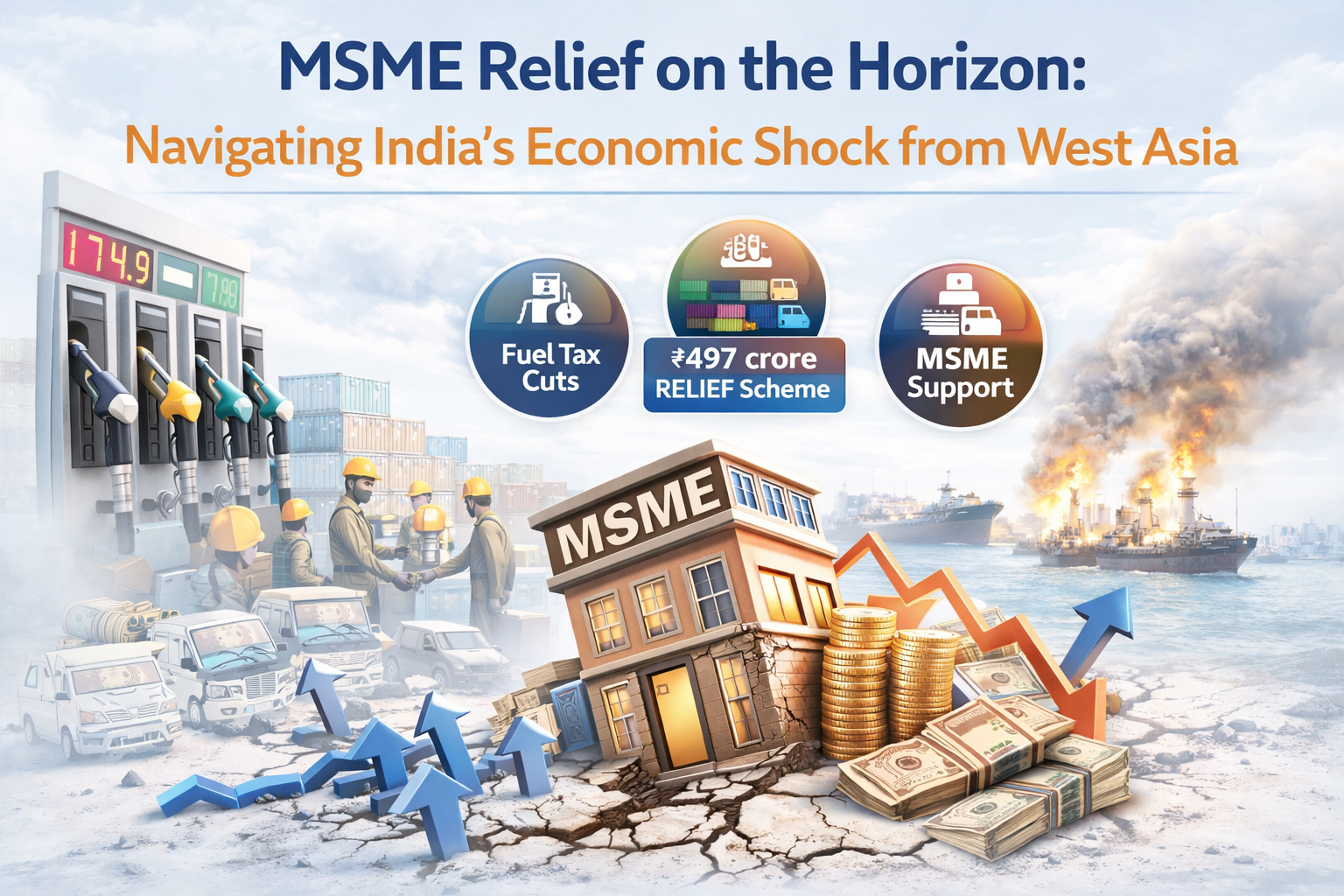
India’s economic resilience is once again being tested this time by geopolitical tensions in West Asia.
As global crude prices surge and supply chains face disruptions, the Indian government has already taken initial steps such as fuel tax cuts. Now, attention is shifting toward a more targeted approach supporting MSMEs, the backbone of India’s economic engine.
What’s Happening?
With the ongoing crisis pushing energy prices higher and disrupting logistics, the government is considering additional relief measures for MSMEs and vulnerable sectors if conditions persist.
This follows a series of recent interventions:
- Reduction in excise duty on petrol and diesel
- Reintroduction of export duties to stabilize domestic supply
- Export support measures including logistics and duty relief
These steps indicate a clear shift from broad-based relief → targeted sectoral support.
Why MSMEs are at the center
MSMEs are particularly sensitive to external shocks due to:
- Thin operating margins
- High dependence on fuel and logistics
- Limited pricing power
The current crisis has amplified these vulnerabilities through:
- Rising input and energy costs
- Shipping disruptions and delays
- Increased freight and insurance expenses
In many cases, cost pressures are rising faster than revenue adjustments, creating stress across the sector.
The Policy response so far
The government’s approach reflects a multi-layered strategy:
Fuel Price Cushioning
Excise duty cuts aim to control inflation and reduce immediate cost pressures.
Supply Stabilization
Export duties on diesel and aviation fuel have been reintroduced to ensure domestic availability.
Export Support
Initiatives like the ₹497 crore RELIEF scheme are designed to:
- Offset rising freight costs
- Reduce logistics bottlenecks
- Protect export-oriented MSMEs
The Bigger Risk: External Shock Transmission
The West Asia crisis is not just an energy story—it’s a transmission mechanism affecting the broader economy:
- Crude oil prices have surged sharply since the conflict escalated
- Shipping routes through the Strait of Hormuz are under pressure
- Input costs are rising across sectors
Given that India imports a significant portion of its energy needs, such shocks quickly translate into:
Inflationary pressure
Margin compression for businesses
Potential slowdown in economic activity
What Lies Ahead?
If the crisis persists, expect:
- Targeted MSME relief packages (credit support, subsidies, policy relaxations)
- Continued focus on inflation management
- Strategic efforts to maintain supply chain resilience
The government’s stance suggests readiness to act—but also highlights the need for fiscal balancing.
Investor Perspective: What to Watch
For investors and market participants, this development signals:
- Increased policy support for domestic sectors
- Continued volatility linked to global energy markets
- Importance of evaluating sector-specific resilience
MSMEs, while vulnerable, also represent early indicators of economic stress and recovery cycles.
India’s response to the West Asia crisis reflects a familiar pattern
Absorb the shock, stabilize the system, and then support the most affected.
But in a globally interconnected economy, resilience is not just about policy intervention
it is about adaptability across sectors.