
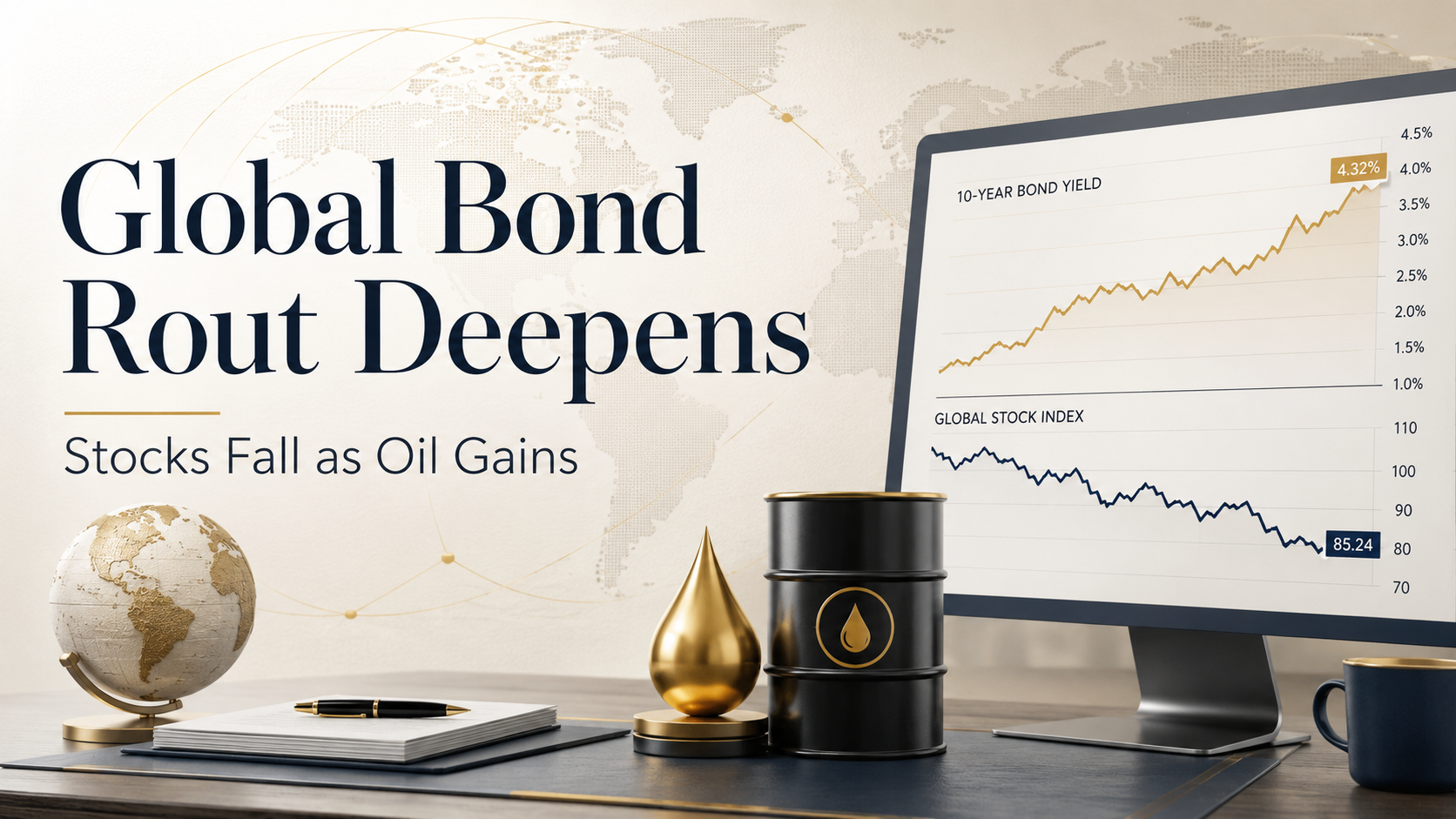
Global Bond Rout Deepens: Stocks Fall as Oil Gains
Global financial markets are witnessing a sharp shift in momentum as bond yields rise, equities weaken, and oil prices move higher.
This combination is creating a complex environment for investors, where multiple asset classes are reacting simultaneously to inflation concerns, interest rate expectations, and geopolitical pressures.
The ongoing bond sell-off—often referred to as a “bond rout”—is becoming a key driver of market sentiment.
What Is a Bond Rout?
A bond rout occurs when bond prices fall sharply, leading to a rise in yields.
This typically happens when:
Inflation expectations increase
Interest rate outlook turns hawkish
Investors move away from fixed income
Rising yields signal higher borrowing costs across the economy, which can impact both businesses and consumers.
Why Are Bond Markets Selling Off?
Several factors are contributing to the current global bond rout:
Rising Inflation Concerns
Higher oil prices are fueling inflation expectations, putting pressure on central banks to maintain tighter monetary policy.
Interest Rate Uncertainty
Markets are adjusting expectations around future rate cuts, leading to volatility in bond yields.
Strong Economic Signals
Resilient economic data can delay rate easing, pushing yields higher.
Oil Prices Add to the Pressure
Oil prices are rising due to supply concerns and geopolitical risks.
Higher oil prices impact markets in multiple ways:
Increase inflation
Raise input costs for businesses
Reduce consumer purchasing power
Pressure corporate margins
This creates a challenging environment for equities.
Why Stocks Are Falling
Equity markets are reacting negatively to rising yields and oil prices.
Key Reasons:
Higher discount rates reduce equity valuations
Rising costs impact profitability
Investor sentiment turns risk-averse
Capital shifts toward safer or higher-yielding assets
This leads to broad-based selling across sectors.
Impact on Global Markets
The combination of rising yields, falling equities, and higher oil prices signals tightening financial conditions.
This can lead to:
Increased market volatility
Reduced liquidity
Slower economic growth expectations
Shifts in global capital flows
What It Means for India
India is influenced by these global trends through multiple channels.
Potential Risks:
Pressure on the rupee due to capital outflows
Higher inflation driven by oil prices
Volatility in equity markets
Rising bond yields domestically
Potential Stability Factors:
Strong domestic demand
Policy support from regulators
Long-term growth fundamentals
Investor Strategy in This Environment
Periods like these require disciplined portfolio management.
A balanced strategy may include:
Allocation to high-quality equities
Short-duration fixed income
Gold as a hedge against uncertainty
Select global diversification
Avoiding overexposure to volatile sectors
The focus should remain on long-term asset allocation rather than short-term market movements.
The Bigger Insight
Markets are adjusting to a reality where:
Inflation remains a concern
Interest rates may stay higher for longer
Geopolitical risks continue to influence commodities
This creates a more complex investing environment compared to the low-rate era.
Conclusion
The deepening global bond rout, coupled with rising oil prices and falling equities, reflects a period of transition in financial markets.
For investors, this is not a signal to react impulsively—but to stay disciplined, diversified, and strategically positioned.
Understanding macro trends and maintaining a structured portfolio approach remains critical for long-term wealth creation.
Explore More Insights
To understand how global market shifts and structured portfolios shape long-term wealth creation, explore insights from Ranjit Jha.
Learn how Rurash Financials supports investors through:
Portfolio engineering
Alternative investments
Unlisted equity opportunities
Personalised wealth strategies
Call to Action
Connect with Rurash Financials to build a resilient, well-structured portfolio designed to navigate global markhttps://rurashfin.com/contactus/et volatility.