
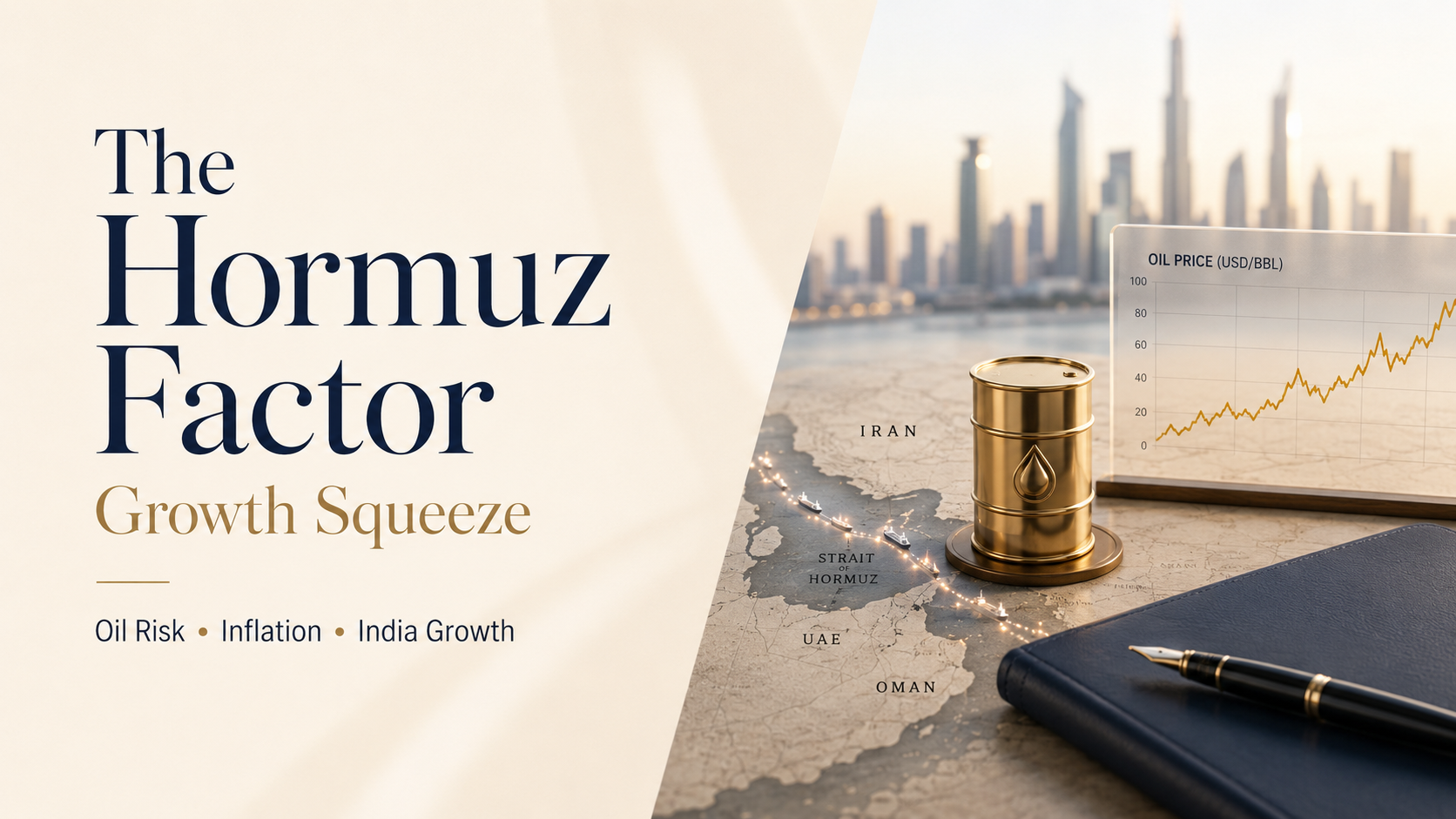
The “Hormuz Factor” Growth Squeeze: What It Means for India and Investors
Global markets are increasingly shaped by geopolitical developments, especially those affecting critical energy routes. One such strategic chokepoint is the Strait of Hormuz.
The “Hormuz Factor” refers to the potential economic impact arising from tensions or disruptions in this region. For a country like India, which relies heavily on crude oil imports, this factor can significantly influence inflation, currency stability, and overall economic growth.
Understanding the Hormuz Factor
The Strait of Hormuz is one of the most important global energy corridors, handling a significant portion of crude oil and liquefied natural gas trade.
Any disruption, or even the perception of risk, can push oil prices higher. This immediate reaction reflects the market’s sensitivity to supply uncertainties.
What Is a Growth Squeeze?
A growth squeeze occurs when rising costs begin affecting multiple parts of the economy simultaneously.
In the context of rising oil prices, this can lead to:
Higher fuel and transportation costs
Increased production expenses
Pressure on corporate margins
Rising inflation
Reduced consumer spending
Currency depreciation
This combination slows economic momentum while increasing financial pressure across sectors.
Impact on Inflation
Crude oil plays a direct and indirect role in inflation.
An increase in oil prices leads to:
Higher fuel prices
Increased logistics and transportation costs
Rising input costs for businesses
These cost pressures are often passed on to consumers, creating broader inflationary trends.
Impact on the Rupee
Higher oil prices increase India’s import bill, which raises demand for foreign currency.
This can:
Weaken the rupee
Increase the current account deficit
Add to imported inflation
Currency depreciation further amplifies the impact of rising oil prices.
Impact on Corporate Earnings
Rising energy costs can affect profitability across sectors.
Industries most exposed include:
Aviation
Logistics
Chemicals
Paints
Manufacturing
Consumer goods
Companies with strong pricing power may manage better, while others may face margin pressure.
What Investors Should Monitor
To assess the impact of the Hormuz Factor, investors should track:
Crude oil price trends
Rupee-dollar movement
Inflation data
Central bank policy signals
Global geopolitical developments
These indicators help determine whether the risk is temporary or structural.
Portfolio Strategy in a High Oil-Risk Environment
In periods of geopolitical uncertainty, structured asset allocation becomes critical.
A resilient portfolio may include:
Quality equities with pricing power
Short-duration fixed income
Gold as a hedge
Select global exposure
Alternative investments for diversification
The focus should remain on long-term resilience rather than short-term reactions.
Conclusion
The Hormuz Factor highlights how global geopolitical risks can directly influence domestic economic stability.
For India, sustained oil price pressure can impact inflation, currency stability, and growth prospects. Investors should focus on building well-diversified portfolios that can withstand such uncertainties.
Explore More Insights
To understand how global risks and structured portfolios influence long-term wealth creation, explore insights from Ranjit Jha.
Learn how Rurash Financials empowers investors through:
Portfolio engineering
Alternative investments
Unlisted equity opportunities
Personalised wealth strategies
Call to Action
Connect with Rurash Financials to build a resilient portfolio designed for global uncertainty and long-term wealth creation.