
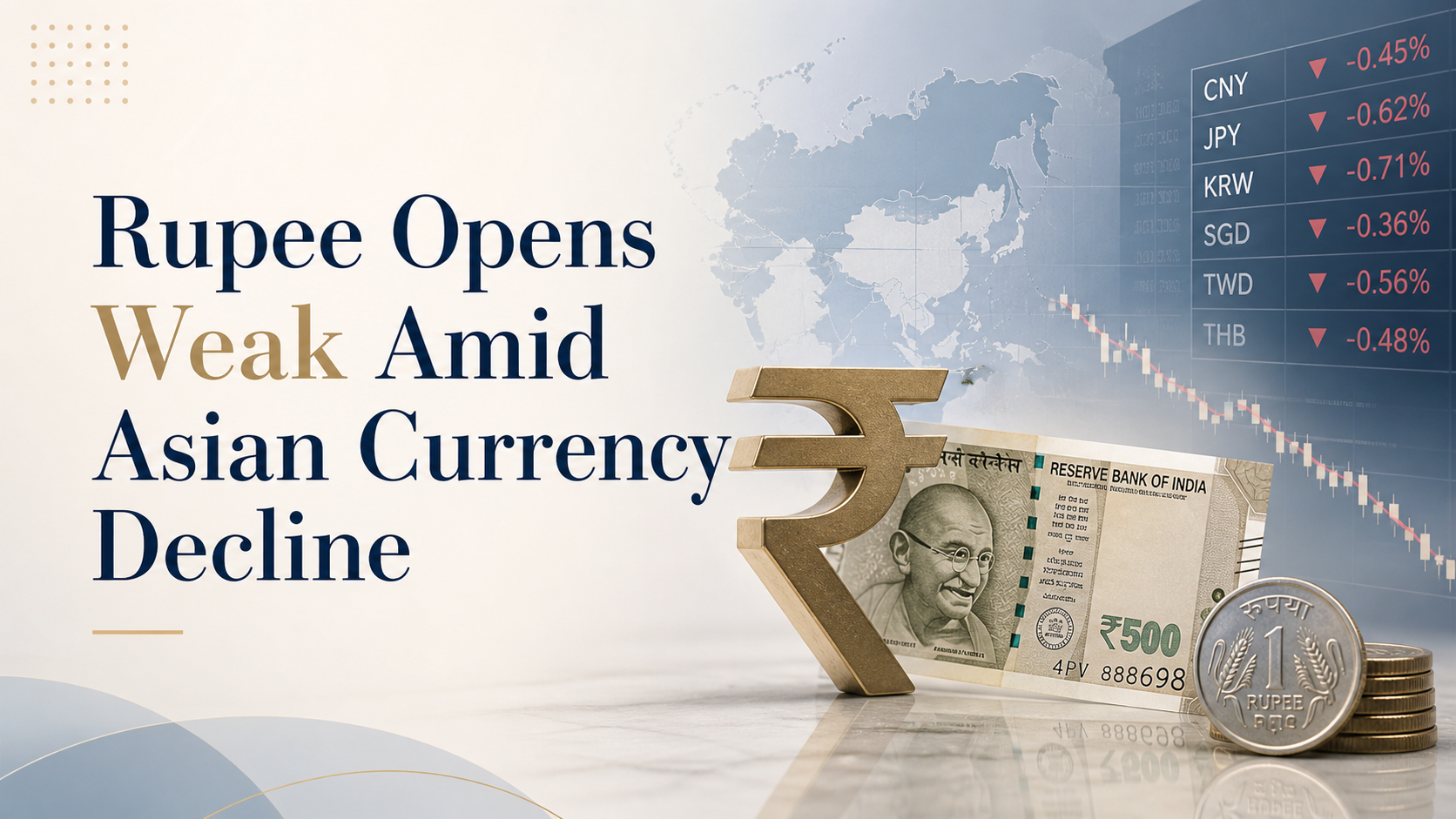
Rupee Opens Weak Amid Asian Currency Fall: What It Means for Markets & Investors
According to recent updates from Moneycontrol, the Indian rupee opened weaker, tracking declines across Asian currencies and reflecting broader global market pressure.
Currency movements are often an early signal of shifts in global sentiment, and the rupee’s weakness highlights the impact of external factors such as dollar strength, capital flows, and geopolitical uncertainty.
For investors and businesses, this is an important macro development to watch.
Why the Rupee Opened Weak
Currency markets are influenced by multiple global and domestic factors.
Key Reasons Behind the Weakness:
1. Strong US Dollar
A stronger dollar typically puts pressure on emerging market currencies, including the rupee.
2. Weak Asian Currencies
Broad-based decline across Asian currencies signals regional pressure rather than India-specific weakness.
3. Global Risk Sentiment
Investors tend to move capital toward safer assets during uncertainty.
4. Oil Price Movements
As a major oil importer, India’s currency is sensitive to crude price fluctuations.
What It Means for India’s Economy
A weaker rupee has both positive and negative implications.
Potential Positives:
Boost for exporters
Higher competitiveness in global trade
Support for IT and pharma sectors
Potential Concerns:
Higher import costs (especially oil)
Inflationary pressure
Impact on current account balance
Volatility in foreign investment flows
Impact on Markets
Currency movement directly influences market behaviour.
Equity Markets:
Export-oriented sectors may benefit
Import-heavy sectors may face pressure
Debt Markets:
Bond yields may react to inflation expectations
FII Flows:
Currency weakness can influence foreign investor sentiment
Role of RBI
The Reserve Bank of India closely monitors currency movements and may intervene when necessary to maintain stability.
RBI typically focuses on:
Controlling excessive volatility
Managing liquidity
Supporting macro stability
Balancing growth and inflation
What Investors Should Do
Currency volatility is part of global investing cycles.
Smart Approach:
Stay diversified across asset classes
Avoid reacting to short-term currency moves
Focus on sectors benefiting from rupee trends
Monitor global macro signals
Maintain long-term investment discipline
What to Watch Ahead
Key factors that will influence the rupee:
US Federal Reserve policy
Dollar index movement
Crude oil prices
Global geopolitical developments
Foreign institutional investment flows
Final Insight
The rupee’s weakness is not an isolated event—it reflects broader global currency trends.
For investors:
Currencies fluctuate.
Markets react.
But long-term wealth is built through disciplined allocation.
Explore More Insights
To understand how global trends, currency movements, and disciplined investing shape long-term wealth creation, explore insights from Ranjit Jha, CEO of Rurash Financials.
Learn how Rurash Financials empowers investors through:
• AIF access
• Portfolio engineering
• Unlisted equity opportunities
• Personalised wealth strategies
Visit:
https://rurashfin.com/blog/
https://rurashfin.com/media/
https://rurashfin.com/contactus/
https://www.linkedin.com/in/ranjit-mjha/
CTA
Connect with us to build a resilient portfolio aligned with global currency and market trends.