Gold Falls 2% Amid Middle East Tensions: What It Means for Investors
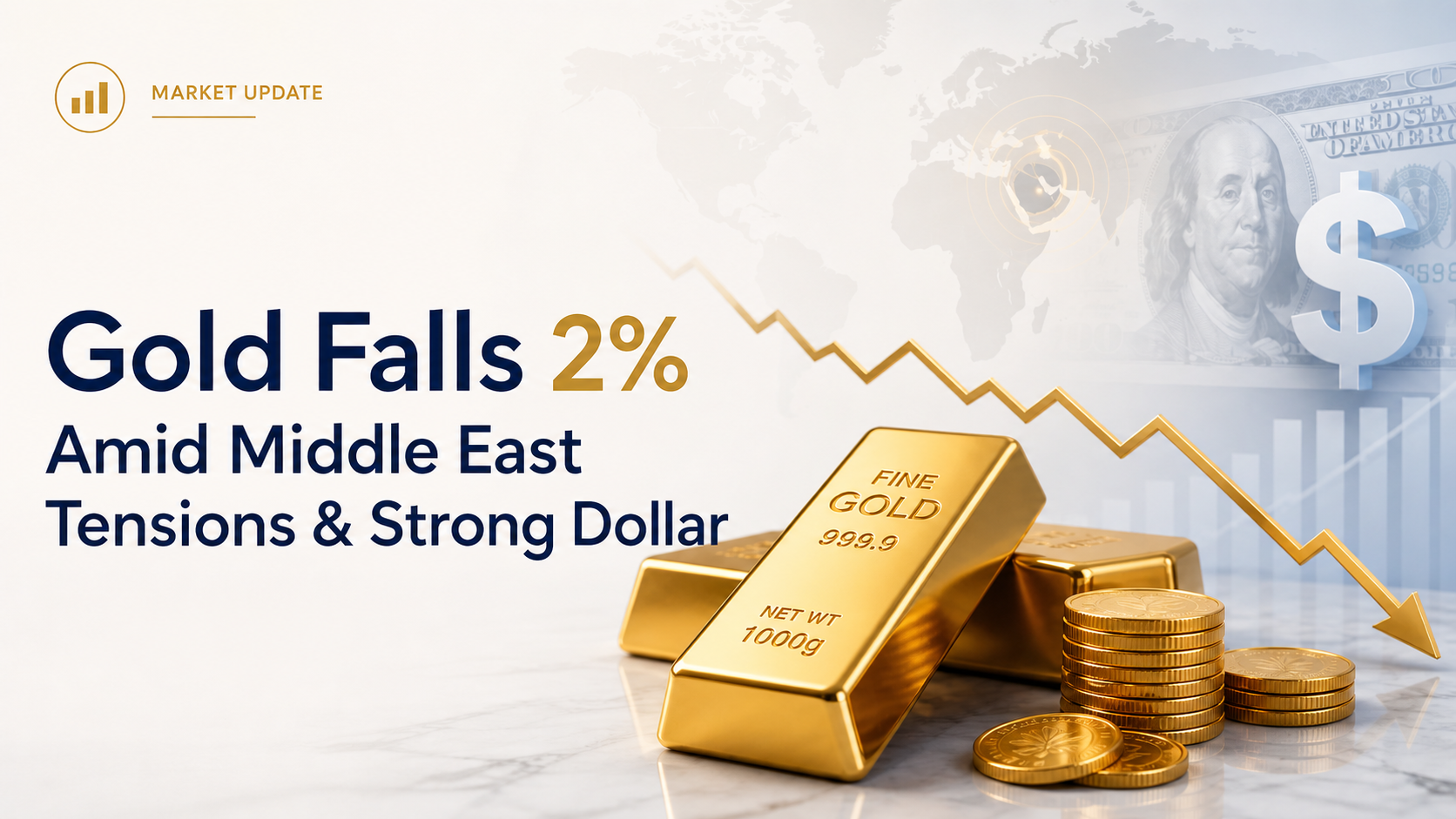
Recent updates from Money control highlight a surprising market move—gold prices falling nearly 2%, even as geopolitical tensions in the Middle East intensify.
Traditionally considered a safe-haven asset, gold usually rises during uncertainty. However, in 2026, the market is being influenced by another powerful force: a strong US dollar and persistent inflation concerns.
This creates a more complex environment for investors.
Why Did Gold Prices Fall?
Despite rising geopolitical risks, gold declined due to multiple factors:
1. Strong US Dollar
A stronger dollar makes gold more expensive for global buyers, reducing demand.
2. Interest Rate Pressure
Higher interest rates increase the opportunity cost of holding non-yielding assets like gold.
3. Profit Booking
After previous rallies, investors may be locking in gains.
The Role of Middle East Tensions
Geopolitical conflict usually supports gold, but its impact can be offset by macroeconomic factors.
Key Effects of Conflict:
Increased oil prices
Inflationary pressure
Risk-off sentiment
Currency volatility
However, in this case, the dollar strength is dominating the safe-haven demand for gold.
Inflation Still in Focus
Inflation remains a major concern globally.
Gold is often seen as a hedge against inflation—but when central banks keep rates high to control inflation, it creates mixed signals for gold prices.
This leads to:
Short-term volatility
Conflicting investor positioning
Shifting asset allocation strategies
What It Means for Investors
This situation highlights an important investing principle:
No asset moves in isolation.
Gold is being influenced by:
Interest rates
Currency strength
Inflation expectations
Geopolitical risks
Smart Investor Approach:
Use gold as part of a diversified portfolio
Avoid over-allocation based on short-term moves
Monitor macro trends (rates + dollar)
Stay disciplined during volatility
Gold’s Role in a Portfolio
Even with short-term declines, gold remains important for:
Hedging against uncertainty
Protecting against inflation cycles
Diversification
Crisis risk management
The key is allocation, not timing.
What to Watch Ahead
Investors should track:
US Federal Reserve policy direction
Dollar index movement
Oil price trends
Escalation or easing of geopolitical tensions
Inflation data globally
These factors will continue to drive gold prices in 2026.
Final Insight
Gold falling during geopolitical tension may seem counterintuitive—but it reflects how modern markets are driven by multiple forces at once.
For investors:
Dollar strength matters.
Interest rates matter.
Inflation matters.
And most importantly—asset allocation matters more than prediction.
Explore More Insights
To understand how global trends, commodities, and disciplined investing shape long-term wealth creation, explore insights from Ranjit Jha, CEO of Rurash Financials, a pioneer in research-driven wealth advisory.
Learn how Rurash Financials empowers investors through:
• AIF access
• Portfolio engineering
• Unlisted equity opportunities
• Personalised wealth strategies
Visit:
https://rurashfin.com/blog/
https://rurashfin.com/media/
https://rurashfin.com/contactus/
https://www.linkedin.com/in/ranjit-mjha/
CTA
Connect with us to build a resilient portfolio across gold, equities, and global macro trends.