
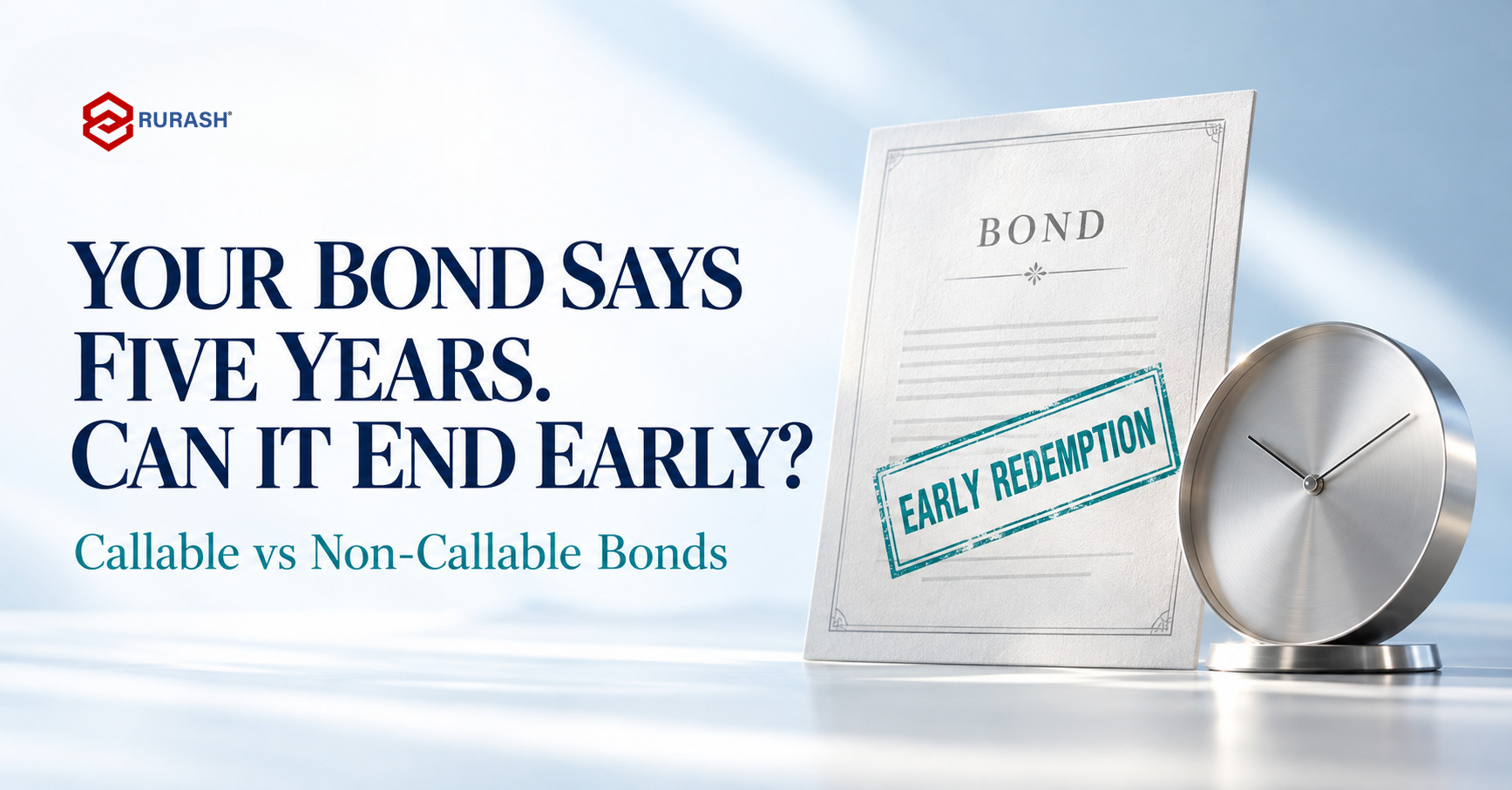
Callable vs Non-Callable Bonds: What to Check Before Investing
A bond may display an attractive coupon and a reassuring maturity date. But one clause can change how long you receive that income: the issuer’s right to redeem it early.
When comparing callable and non-callable bonds, look beyond the headline interest rate. The repayment terms can affect your investment horizon and the amount you ultimately earn.
What is a callable bond?
A callable bond allows the issuer to redeem the bond before its scheduled maturity, subject to specified conditions.
The issue documents should explain when that right becomes available, the redemption price and the required notice.
If the issuer exercises the call, future coupon payments stop after redemption. Your money returns earlier than you may have planned.
How is a non-callable bond different?
A non-callable bond does not give the issuer the same ordinary contractual option to redeem early.
That removes one source of uncertainty, but it does not remove credit risk, market-price risk or liquidity risk. Other exceptional redemption provisions may also exist, so the documents still require careful reading.
Why might an issuer call a bond?
One reason is a fall in borrowing costs.
An issuer may be able to repay an existing higher-coupon bond and replace it with cheaper financing, where its terms permit.
For the investor, this creates reinvestment risk: the returned money may have to be invested at a lower available rate.
A call is an option, not a certainty. Its exercise depends on the contract and the issuer’s circumstances.
An example of the income difference
Suppose a hypothetical bond has a face value of ₹1 lakh, an annual coupon of 8% and a five-year maturity. It permits redemption at face value after year two.
If called after two years, you would receive ₹16,000 in coupons across those two years, assuming annual payments and no default, plus the redemption amount.
You would not receive the remaining three years of coupons from that bond.
What happens next depends on the opportunities available when the money returns. This example excludes taxes, transaction costs and any purchase premium or discount.
Compare the full terms
Before choosing, examine:
• Credit quality: Can the issuer meet its obligations?
• Call protection: How long before ordinary early redemption becomes possible?
• Call price: What amount would you receive?
• Yield to call: What return results if redemption occurs at a specified call date?
• Yield to maturity: What return results if the bond continues to maturity?
• Liquidity: Could you sell if your needs changed?
If you buy above face value, early redemption at face value can also affect your realised return.
Which structure fits your goal?
For an investor planning a multi-year income stream, early repayment can disrupt the plan.
A callable bond may still be suitable, but any additional yield should be assessed alongside call risk, credit quality and the investor’s ability to reinvest.
Compare bonds with reasonably similar credit quality and terms. A coupon comparison alone can hide substantial differences.
Ranjit Jha’s Perspective — Draft for Approval
Proposed wording for Ranjit Jha’s review; not an approved quotation.
“Fixed-income planning should examine both the income a bond offers and the conditions under which that income can stop. A call clause can change the investor’s timeline. Understanding it before investing helps make the decision more complete.”
Connect With Rurash Financials
Reviewing a bond means reading beyond its coupon.
Connect with Rurash for a discussion on bond terms, repayment structure, credit considerations and suitability for your income needs.