
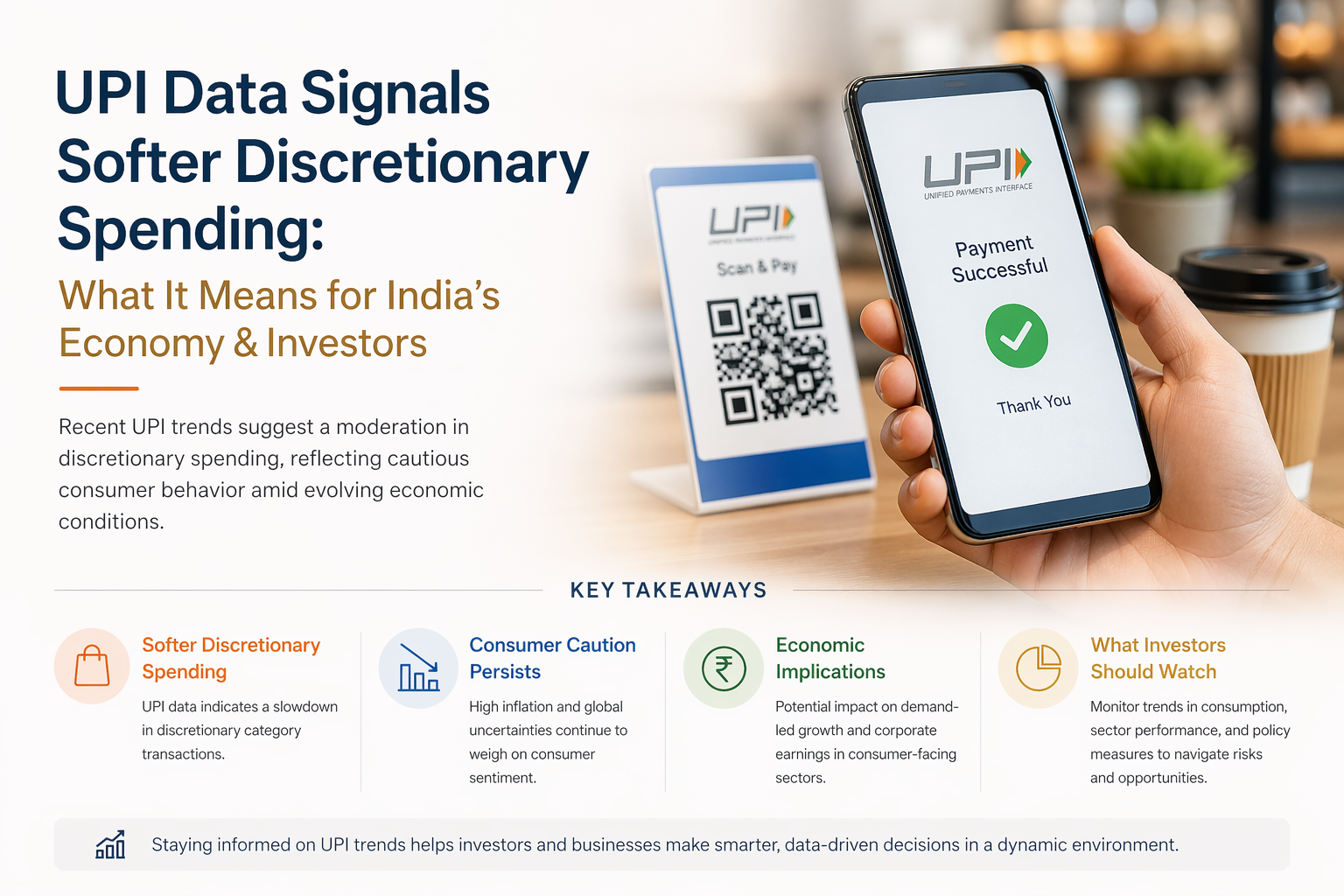
UPI Data Signals Softer Discretionary Spending: What It Means for India’s Economy & Investors
India’s digital payments ecosystem continues to offer one of the clearest real-time windows into consumer behaviour. Recent UPI transaction trends indicate a moderation in discretionary spending during March 2026, with payments linked to categories such as salons and fast food witnessing softer momentum.
While headline consumption remains resilient, this shift suggests that Indian consumers may be becoming more selective with non-essential spending amid evolving economic conditions.
For investors and businesses, such behavioural changes matter.
Why UPI Data Matters
The Unified Payments Interface has become more than just a payment platform—it is now a high-frequency indicator of economic activity.
Because millions of daily transactions occur across categories, UPI trends help track:
Consumer demand patterns
Spending confidence
Sector-level momentum
Urban consumption trends
Informal and formal economy activity
When discretionary categories slow, it often reflects a shift in household priorities.
What Softer Discretionary Spending Suggests
Reduced spending in lifestyle categories such as salons and fast food may indicate:
More Cautious Consumers
Households may be prioritising essentials over impulse spending.
Inflation Sensitivity
Higher costs in rent, fuel, education, or groceries can reduce room for discretionary expenses.
Selective Consumption
Consumers may still spend—but with greater value consciousness.
Temporary Behavioural Shift
Spending moderation may also reflect seasonal or month-specific adjustments.
What It Means for Businesses
Consumer-facing sectors should closely monitor these signals.
Industries potentially impacted include:
Quick service restaurants
Personal care services
Lifestyle retail
Entertainment spending
Premium convenience categories
Businesses may need to focus more on:
Pricing strategy
Value offerings
Loyalty retention
Operational efficiency
What It Means for Markets
Consumption remains a key pillar of India’s growth story. Therefore, any moderation in discretionary spending can influence investor sentiment toward sectors dependent on urban consumer demand.
Markets may become more selective within:
Consumer discretionary stocks
Retail businesses
Food service chains
Platform-based spending ecosystems
At the same time, essential consumption and value-driven brands may remain resilient.
Why India’s Bigger Story Still Holds
A softer March trend does not weaken India’s structural consumption narrative.
India continues to benefit from:
Rising income formalisation
Expanding digital payments adoption
Strong domestic demand base
Urbanisation trends
Growing middle-class consumption potential
Short-term moderation often reflects adjustment—not structural weakness.
How Smart Investors Respond
Disciplined investors avoid reacting to one month of data. Instead, they track evolving trends.
Focus areas include:
Quality businesses with pricing power
Essential consumption sectors
Long-term digital ecosystem plays
Companies adapting to value-conscious consumers
Diversified portfolio positioning
Final Insight
UPI data showing softer discretionary spending is an important signal—but not a negative verdict on India’s economy.
It reflects a maturing consumer who is becoming more selective, more value-aware, and more strategic with spending.
For investors, the lesson is clear:
Consumption continues—but leadership within consumption may shift.
Explore More Insights
To understand how consumer trends, macro shifts, and disciplined investing shape long-term wealth creation, explore insights from Ranjit Jha, CEO of Rurash Financials, a pioneer in research-driven wealth advisory.
Learn how Rurash Financials empowers investors through:
• AIF access
• Portfolio engineering
• Unlisted equity opportunities
• Personalised wealth strategies
Visit:
https://rurashfin.com/blog/
https://rurashfin.com/media/
https://rurashfin.com/contactus/
https://www.linkedin.com/in/ranjit-mjha/
CTA
Connect with us to stay ahead of economic trends and structure your portfolio for changing consumer cycles.