
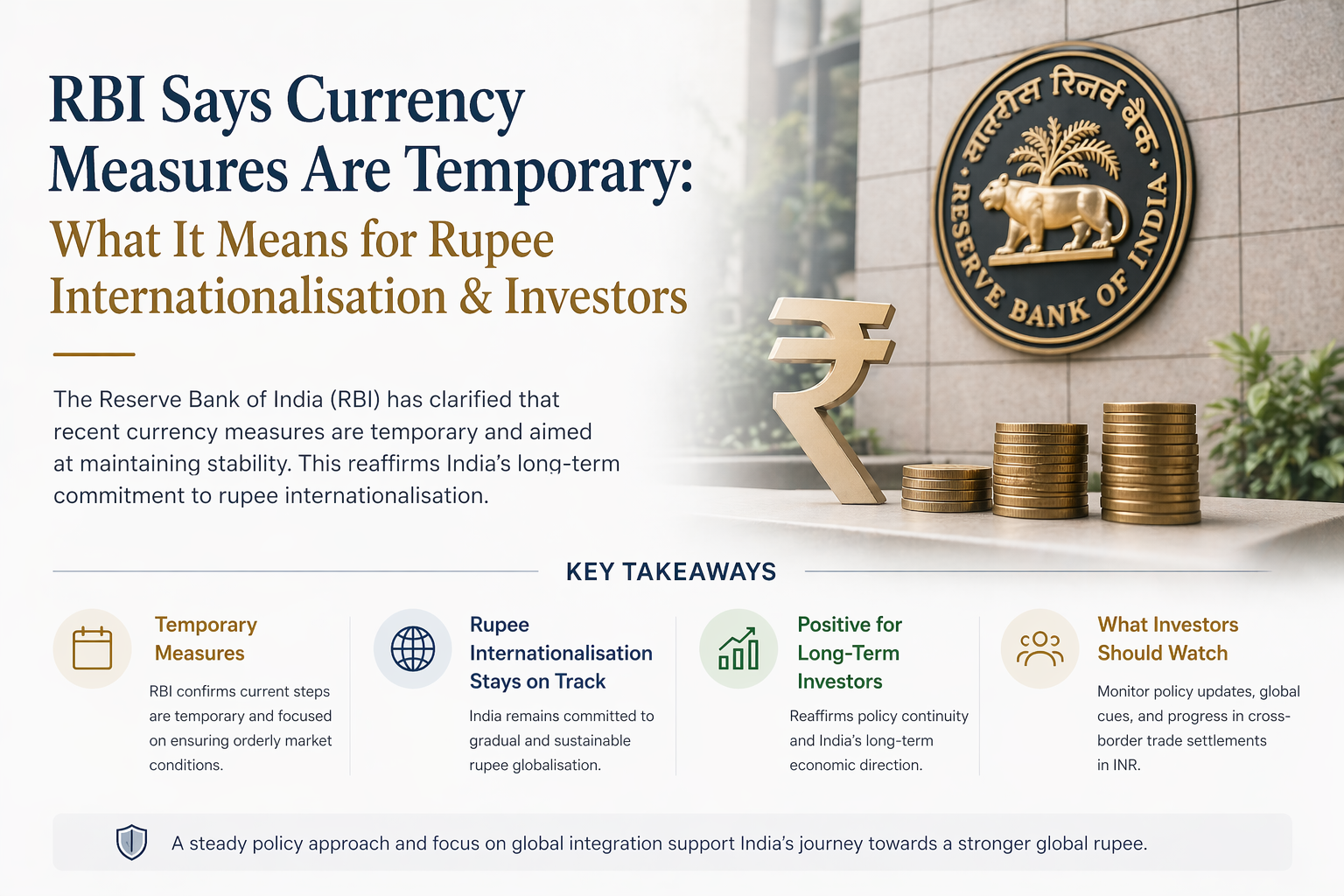
RBI Says Currency Measures Are Temporary: What It Means for Rupee Internationalisation & Investors
India’s long-term ambition to make the Indian Rupee a more globally accepted currency remains firmly intact, even as the Reserve Bank of India has clarified that recent currency-related measures are temporary in nature.
The statement signals an important balance: short-term policy flexibility to manage market conditions, while staying committed to the broader strategic goal of rupee internationalisation.
For investors, businesses, and global markets, this is a meaningful development.
What Is Rupee Internationalisation?
Currency internationalisation refers to increasing the use of a currency beyond domestic borders for:
Global trade settlement
Cross-border investments
Foreign reserves
International borrowing and lending
Financial market transactions
For India, this means gradually positioning the rupee as a stronger participant in global commerce.
Why the RBI’s Statement Matters
Recent currency measures were introduced to stabilise market conditions and improve rupee trading efficiency. By clarifying that these are temporary, the RBI is sending two strong messages:
1. Stability Comes First
Short-term actions may be needed to manage volatility, liquidity, or external pressures.
2. Long-Term Reform Continues
India remains committed to deeper structural progress in making the rupee globally relevant.
This combination reflects a mature central banking approach.
Why Rupee Internationalisation Is Important for India
A stronger global role for the rupee can create multiple long-term advantages:
Lower Dependence on Foreign Currencies
Especially for trade invoicing and settlement.
Reduced Exchange Rate Risk
Indian businesses can transact more directly in rupees.
Stronger Financial Influence
India gains greater presence in regional and global markets.
Support for Capital Markets
Deeper currency usage can strengthen bond and equity market participation.
What It Means for Businesses
For exporters, importers, and multinational firms, broader rupee acceptance can lead to:
Simpler settlement mechanisms
Lower hedging costs over time
Better pricing certainty
More efficient trade relationships
As India’s economic footprint expands, demand for rupee-linked transactions may rise naturally.
What It Means for Investors
For investors, this is part of a larger macro story.
A progressively internationalised rupee may support:
Stronger long-term confidence in Indian assets
Broader foreign participation in debt markets
Lower currency volatility over time
Greater institutional flows into India
This is especially relevant as India’s economy and capital markets continue to scale.
India’s Position in 2026
India enters this phase with several structural strengths:
Large and growing economy
Expanding digital payment ecosystem
Rising trade relevance
Strong domestic markets
Policy focus on financial deepening
These factors support the rupee’s long-term credibility.
Final Insight
The RBI’s message is clear:
Temporary market measures do not alter India’s strategic direction.
Rupee internationalisation is a long-term journey—not a short-term event. It will likely evolve gradually through trade growth, policy credibility, and market depth.
For investors, the takeaway is simple:
India is thinking beyond today’s markets and building for tomorrow’s relevance.
Explore More Insights
To understand how macro policy, currency trends, and disciplined investing shape long-term wealth creation, explore insights from Ranjit Jha, CEO of Rurash Financials, a pioneer in research-driven wealth advisory.
Learn how Rurash Financials empowers investors through:
• AIF access
• Portfolio engineering
• Unlisted equity opportunities
• Personalised wealth strategies
Visit:
https://rurashfin.com/blog/
https://rurashfin.com/media/
https://rurashfin.com/contactus/
https://www.linkedin.com/in/ranjit-mjha/
CTA
Connect with us to stay ahead of policy shifts, currency trends, and long-term investment opportunities.