
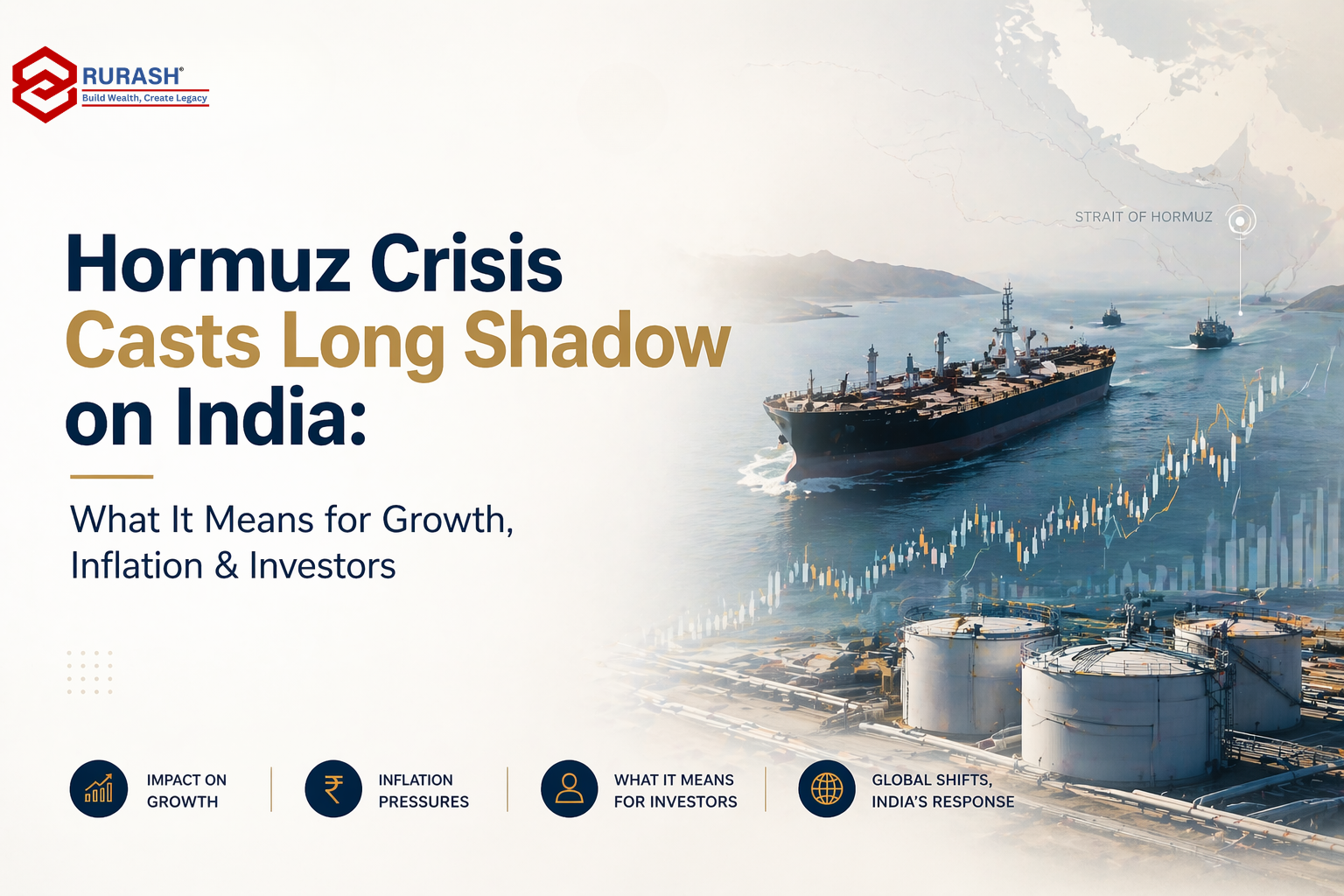
Hormuz Crisis Casts Long Shadow on India: What It Means for Growth, Inflation & Investors
Rising geopolitical tensions around the Strait of Hormuz are emerging as a significant macroeconomic risk for India in 2026. As one of the world’s most critical energy shipping routes, any disruption in Hormuz has direct implications for oil prices, inflation, trade balances, and economic growth.
With concerns highlighted in recent policy discussions, the message is clear: global geopolitical shocks continue to shape domestic economic outcomes.
For investors and businesses, understanding these risks is essential.
Why the Strait of Hormuz Matters
The Strait of Hormuz is one of the world’s most important energy corridors, through which a substantial share of global crude oil and LNG supplies move.
Any disruption can lead to:
Higher global crude oil prices
Supply chain uncertainty
Increased freight and insurance costs
Currency volatility across emerging markets
For oil-importing economies like India, this matters immediately.
What It Means for India
India imports a large portion of its crude oil requirements. As a result, any sustained spike in energy prices can create pressure across the economy.
1. Inflation Risks Rise
Higher crude prices can increase:
Fuel costs
Transportation expenses
Logistics costs
Input prices across industries
This may delay inflation cooling trends.
2. Growth Could Moderate
Higher costs reduce household spending power and corporate margins, potentially slowing broader growth momentum.
3. Trade Deficit Pressure
Costlier energy imports can widen India’s trade deficit and impact external balances.
4. Rupee Volatility
Rising oil import bills can increase demand for foreign currency, placing pressure on the rupee.
What Policymakers May Focus On
In such an environment, policymakers often prioritise:
Inflation management
Currency stability
Liquidity support if required
Monitoring external account pressures
Ensuring adequate fuel supply resilience
India’s macro framework today is stronger than in previous decades, but global shocks still require careful navigation.
What It Means for Markets
Geopolitical uncertainty often leads to selective market reactions.
Potential Beneficiaries:
Energy producers
Defence-related sectors
Select commodity-linked businesses
Sectors That May Face Pressure:
Aviation
Logistics
Paints / chemicals
Oil-intensive manufacturers
Consumption segments sensitive to inflation
Markets may remain volatile until clarity emerges.
How Smart Investors Respond
Disciplined investors do not react emotionally to geopolitical headlines. They focus on structure.
Key actions include:
Diversified portfolios
Exposure to resilient sectors
Quality businesses with pricing power
Long-term asset allocation discipline
Avoiding panic-driven decisions
Final Insight
The Hormuz crisis is a reminder that global geopolitics can quickly become a domestic economic issue.
For India, the challenge is managing imported inflation and growth risks while maintaining macro stability.
For investors, uncertainty creates noise—but also opportunity for those who stay disciplined.
Explore More Insights
To understand how global macro shifts, policy trends, and disciplined investing shape long-term wealth creation, explore insights from Ranjit Jha, CEO of Rurash Financials, a pioneer in research-driven wealth advisory.
Learn how Rurash Financials empowers investors through:
• AIF access
• Portfolio engineering
• Unlisted equity opportunities
• Personalised wealth strategies
Visit:
https://rurashfin.com/blog/
https://rurashfin.com/media/
https://rurashfin.com/contactus/
https://www.linkedin.com/in/ranjit-mjha/
CTA
Connect with us to structure your portfolio for a changing global environment.