
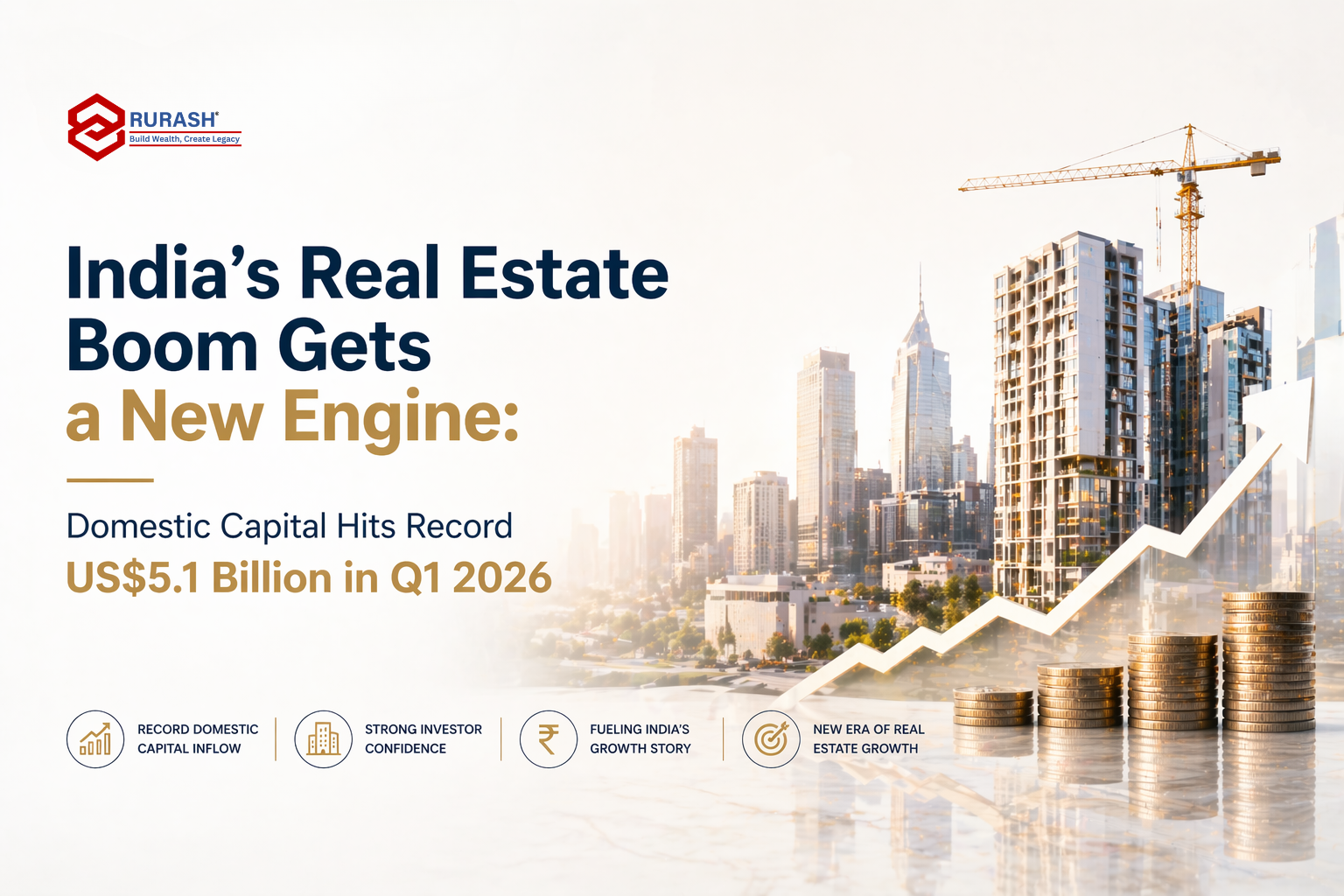
India’s Real Estate Boom Gets a New Engine: Domestic Capital Hits Record US$5.1 Billion in Q1 2026
India’s real estate sector is entering a new phase of strength—driven increasingly by domestic capital rather than overseas money. In a significant signal for the sector, capital inflows into Indian real estate reportedly reached a record US$5.1 billion in Q1 2026, highlighting growing confidence in the country’s long-term property market.
This trend marks an important shift: Indian investors, institutions, and family offices are becoming the primary force behind the next cycle of real estate growth.
Why This Matters
For years, foreign capital played a dominant role in India’s commercial and premium real estate story. Today, domestic investors are stepping in with stronger conviction.
That matters because domestic capital is often:
More patient and long-term focused
Better aligned with local market realities
Faster in decision-making
Less sensitive to global volatility
Supportive of sustained sector growth
This creates a more stable investment environment.
What Is Driving Domestic Capital Inflows?
Several structural factors are supporting this momentum:
1. Strong Economic Growth Outlook
India remains one of the fastest-growing major economies, supporting long-term demand across residential, office, retail, and logistics assets.
2. Rising Institutional Participation
Indian institutions, developers, funds, and wealthy investors are increasingly allocating capital to real assets.
3. Urbanisation & Infrastructure
Metro expansion, highways, industrial corridors, and smart-city projects are unlocking new real estate opportunities.
4. Attractive Yield Opportunities
Compared with many traditional assets, real estate can offer income generation, appreciation potential, and diversification.
Which Segments May Benefit Most?
Residential Real Estate
Demand from end-users and premium buyers remains strong in leading cities.
Commercial Office Space
India’s office markets continue to attract global occupiers and GCC expansion.
Warehousing & Logistics
E-commerce and manufacturing growth are driving demand.
Alternative Real Estate
Student housing, healthcare assets, and data centres are emerging themes.
What It Means for Investors
The surge in domestic capital signals that real estate is increasingly being viewed as a strategic asset class.
For investors, it reinforces themes such as:
Portfolio diversification
Inflation-linked assets
Long-term wealth preservation
Income-generating opportunities
Participation in India’s growth cycle
What Smart Investors Understand
Real estate cycles are no longer driven only by foreign money.
The next phase may be shaped by local conviction, institutional maturity, and domestic wealth creation.
That makes this trend potentially more durable.
Final Insight
India’s record US$5.1 billion real estate inflow in Q1 2026 is more than a headline—it is a sign of changing market leadership.
Domestic capital is not just participating.
It is increasingly leading.
For long-term investors, that may be one of the most important signals in India’s evolving asset landscape.
Explore More Insights
To understand how macro trends, alternative assets, and disciplined investing shape long-term wealth creation, explore insights from Ranjit Jha, CEO of Rurash Financials, a pioneer in research-driven wealth advisory.
Learn how Rurash Financials empowers investors through:
• AIF access
• Portfolio engineering
• Unlisted equity opportunities
• Personalised wealth strategies
Visit:
https://rurashfin.com/blog/
https://rurashfin.com/media/
https://rurashfin.com/contactus/
https://www.linkedin.com/in/ranjit-mjha/
CTA
Connect with us to explore real estate and wealth opportunities aligned with India’s growth story.