
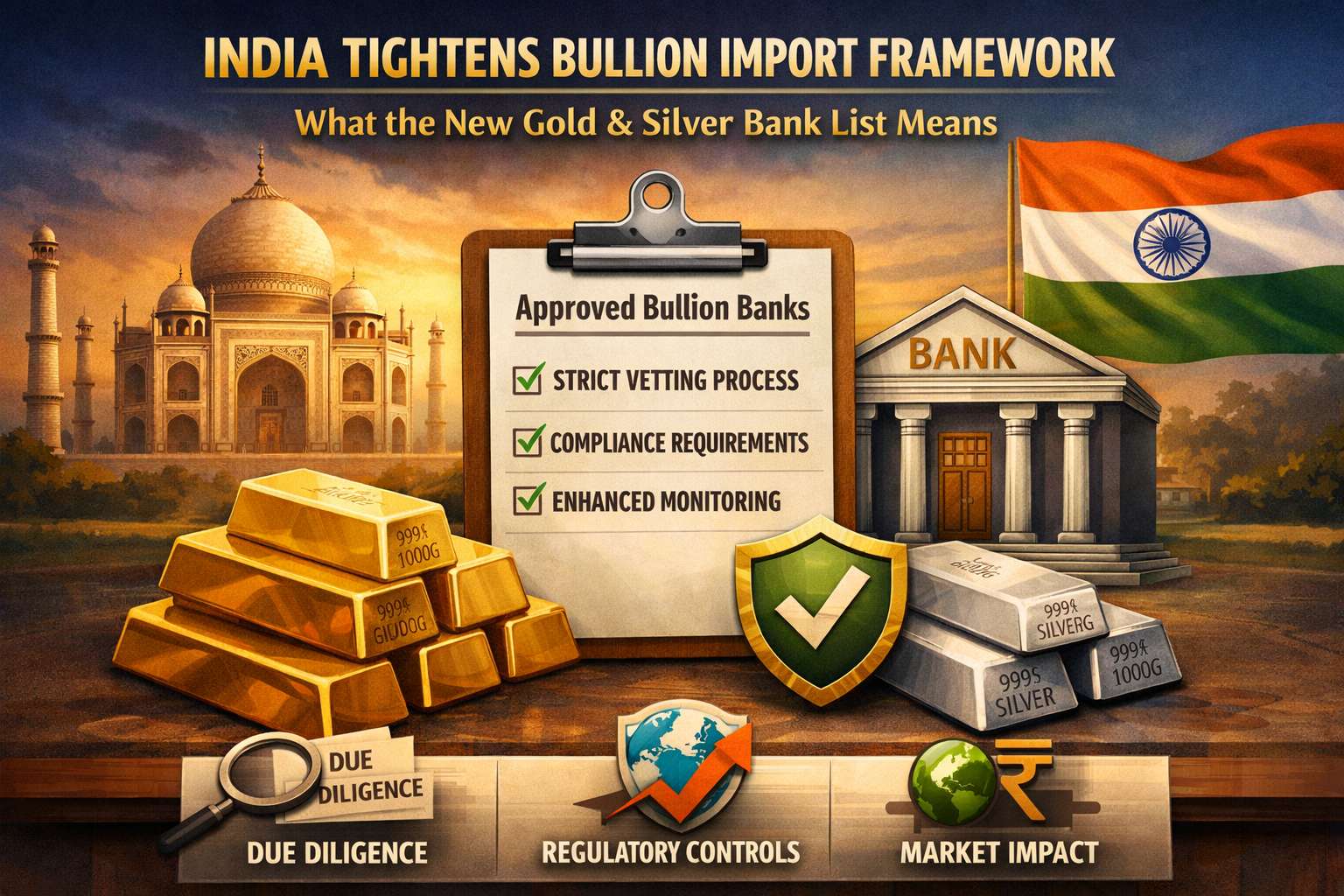
India Tightens Bullion Import Framework: What the New Gold and Silver Bank List Means
India has updated the list of banks authorised to import gold and silver, bringing fresh clarity to the bullion trade for the next three years. The revised framework, issued by the DGFT, is valid from April 1, 2026 to March 31, 2029 and identifies which banks can import both metals, and which can import only gold.
This is more than an administrative update. In a market where bullion imports influence jewellery supply, trade flows, and even the current account, regulatory clarity matters.
What Has Changed
Under the new norms, major banks including SBI, HDFC Bank, ICICI Bank, Axis Bank, Kotak Mahindra Bank, and Bank of India are authorised to import both gold and silver. Other approved institutions include Deutsche Bank, Federal Bank, IndusInd Bank, Indian Overseas Bank, Punjab National Bank, RBL Bank, Yes Bank, and ICBC. A separate category has also been created for banks permitted to import only gold, where Union Bank of India and SBER Bank currently fall.
The notification replaces the earlier list and gives market participants a clear operating framework through 2029.
Why This Matters
Bullion imports in India are not just about commodity demand—they are closely linked to financial stability, trade balances, and market transparency.
India remains one of the world’s largest consumers of gold and the biggest importer of silver, which makes precious metal imports strategically important. Because gold imports can affect the current account deficit and currency stability, the government tightly regulates who can bring bullion into the country.
By routing imports through authorised banks, authorities aim to improve traceability, strengthen oversight, and reduce irregularities in the bullion trade.
Impact on the Bullion Ecosystem
For jewellers, refiners, and institutional buyers, this update brings operational certainty.
Recent disruptions in bullion clearances had created pressure across the supply chain. The revised bank list is expected to support smoother import flows through formal channels, helping reduce uncertainty for businesses dependent on timely access to gold and silver. This also reinforces a more organised and transparent supply structure.
In practical terms, the move supports:
Better visibility on import channels
Greater formalisation of the bullion trade
Reduced dependency on unofficial routes
Improved confidence for downstream market participants
These are important shifts, especially in an environment where global commodity prices remain volatile.
The Bigger Economic View
This decision reflects a broader policy balance.
On one side is India’s strong and persistent demand for precious metals. On the other is the need for tighter regulatory control over imports that can influence the trade bill and macro stability. The updated framework appears designed to support both goals: ensure availability while keeping inflows traceable and regulated.
For investors and businesses, the message is clear: bullion may remain a key asset class and consumption category in India, but the ecosystem around it is becoming more structured, formal, and compliance-driven.
Final Insight
The updated bullion import list is not just a banking notification—it is a signal of how India is managing precious metal demand with greater precision.
In a market shaped by volatility, regulation, and strong consumption, clarity of access matters. And with the new norms valid till 2029, the bullion ecosystem now has a clearer operating roadmap for the years ahead.
Explore More Insights
To understand how policy shifts, market structure, and disciplined investing shape long-term wealth creation, explore insights from Ranjit Jha, CEO of Rurash Financials.
Learn how Rurash Financials empowers investors through:
• AIF access
• Portfolio engineering
• Unlisted equity opportunities
• Personalised wealth strategies
CTA
Connect with us to stay ahead of market, policy, and investment developments.